Catching up with Mary Elizabeth Law

Editorial note: Several months ago, we had the opportunity to interview one of our amazing female retiree pioneers – Mary Elizabeth (“M.E.”) Law – at her residence in Tiger, Georgia. It was a wonderful conversation, and our plan was to publish this special feature in March during Women’s History Month. Sadly, Mary Elizabeth passed away on February 28, 2026. We were privileged to meet her and are publishing this edition of Keeping Current with the permission of her family, and to honor her legacy and memory. On behalf of Georgia Power, we offer our sincere condolences to her family at this time. We invite you to read Mary Elizabeth Law’s obituary here and share a note/memory with her family if you like on the webpage.
At the age of 94, Mary Elizabeth Law’s roots in Rabun County run deep, right along with Georgia Power’s.
Drawing many part-time residents and tourists in the summer, Rabun County is a very scenic part of Northeast Georgia that borders North Carolina to the north and South Carolina to the east. In many ways, the history of the county is intertwined with Georgia Power, thanks to the company’s hydropower dam investments and local economic impact. As a result, the company’s impact on Georgia Power retiree Mary Elizabeth and her family, as well as many county residents, has been profound.
Mary Elizabeth is a pioneer for women in Rabun County. Locals have referred to her as the “person who ran Georgia Power in Rabun County.” Mary joined Georgia Power in 1965 initially part-time as the sole Customer Service representative at the Clayton Service Office during a time, she says, when the company was largely male dominated. She became the face of Georgia Power for many customers in the area, taking power bill payments and addressing customer billing questions.
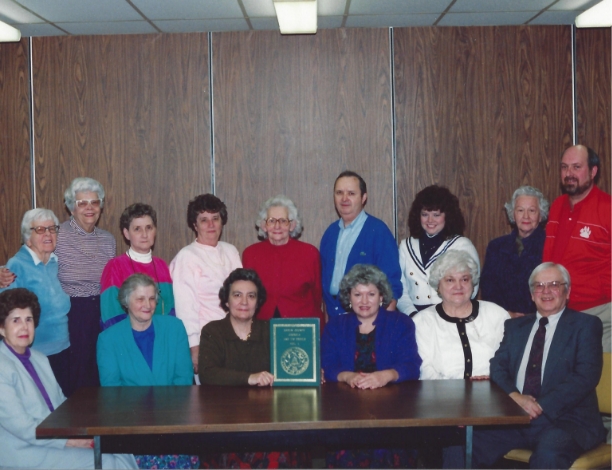
In 1979, she was asked to join full-time as an Operating clerk for the Rabun County Operating Headquarters where she entered time sheets by hand for the line crew, adhering to the union’s hourly contract guidelines. She retired in 1992 after 27 years of service. Even before she retired, she volunteered with the Rabun County Historical Society at its creation in 1978. She served as treasurer of the board of directors beginning in 1995, when a board was first organized, and served on the county planning commission. In 2007, she was elected as one of five county commissioners in Rabun County, becoming the first female commissioner.
Mary Elizabeth’s two sons, Keith and Tom, both worked for Georgia Power at some point. Keith worked for Georgia Power for 42 years, retiring as a local manager, while Tom worked for Georgia Power for four summers as an intern at North Georgia Hydro, which includes the Terrora powerhouse at the upper end of Tallulah Lake.
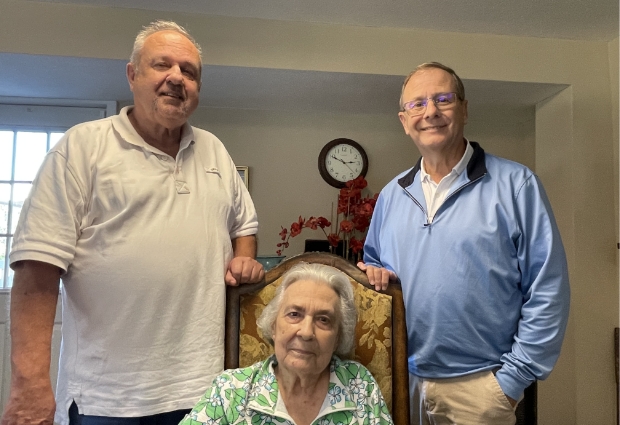
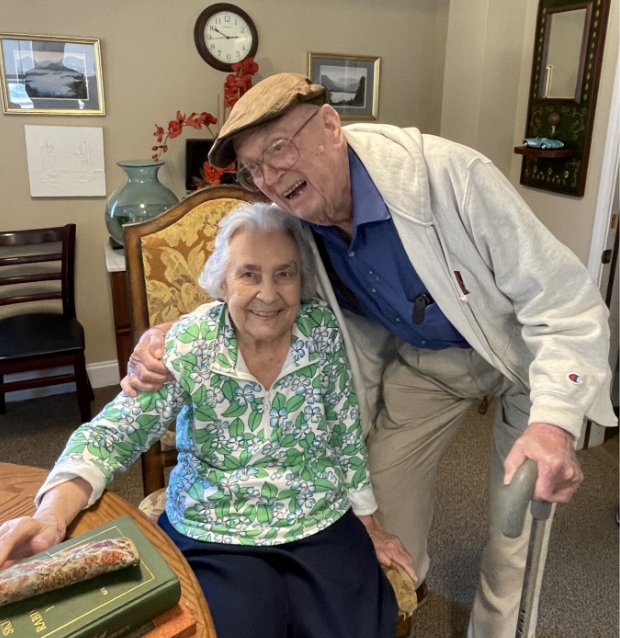
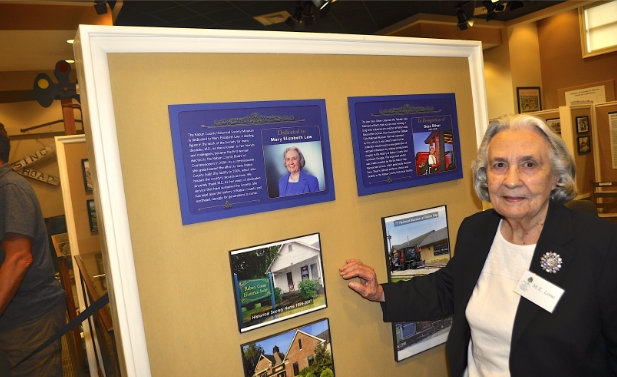
In 2021, the Rabun Historical Society dedicated its Historical Society Museum to Mary Elizabeth in honor of her dedication and service to the historical society and preserving the county’s heritage. We caught up with Mary Elizabeth at the Cannonwood Village assisted living facility in Tiger, Ga., several months ago before her passing. She was joined by her friend Jack Smith, who owned a local heating and air business that was Georgia Power certified to make residences and businesses all electric in the early 1960s.
Georgia Power Hydro – A Powerful History
She and her friend Jack Smith met with us recently to discuss how Georgia Power had a positive impact on the lives of Rabun County citizens. A heating and air business owner, Jack was one of a few area businesses that was Georgia Power certified to make residences and businesses all electric in the early 1960s.
In Rabun County, Georgia Power, the Tallulah Falls Railroad, and the U.S. Forest Service all interacted with one another, they say, increasing mobility and income to a rural population. The hydro dams in the area initially sent electricity to streetcars in Atlanta, but by the 1930s, electricity expanded to Rabun County. This enabled economic growth and tourism, enabling the train to bring tourists and jobs to rural communities in the area. Wealthy Atlantans began building houses on Lake Rabun and take the train to Lakemont. Georgia Power’s first president Preston Arkwright had a home on Lake Rabun, they said, and his wife would stay a lot during summer. A plethora of summer camps also sprang up in Lakemont, Tiger, and Clayton; and Tallulah Falls became a destination for weddings and parties.
They also credit Georgia Power for being a high-tech leader early on, building the tunnel from Tallulah Falls to the Tallulah Falls Gorge and for the advanced drilling that made it possible. Today, Georgia Power and the U.S. Forst Service own roughly 75 percent of the approximate 371 acres in Rabun County.
Georgia Power has six hydroelectric dams along the Tallulah and Tugalo Rivers in Rabun County, Ga., which form several lakes: Burton, Seed, Rabun, Tallulah Falls, Tugalo, and Yonah. These dams were built between 1913 and 1927 and are part of the North Georgia Hydro Group. The dams generate electricity through the natural energy of falling water and are regulated by the Federal Energy Regulatory Commission (FERC).
Six dams and generating stations ultimately were built between 1913 and 1927, sending 166,420 kilowatts of power to Atlanta. The Tallulah and Tugalo Rivers thus became the most completely developed, continuous stretch of waterways in the country for hydroelectric power.
Read more on the history of Rabun County and Georgia Power’s impact here .
What are you up to now?
At 94 years old, I’ve slowed down quite a bit and enjoy spending time with my family and friends. I continue helping out and serve on the board of the Rabun County Historical Society as I’m able. I’ve had the privilege of developing some great friendships through my work there and am grateful that they dedicated the Rabun County Historical Society Museum in my honor.
And shortly after my retirement, I served for eight years on the county planning commission. In 2007, I decided I wanted a bigger voice in the way the county was run. So, in 2007, I ran for the job of commissioner and became the county’s first female commissioner I took my role seriously to help the county properly manage growth.
What was your proudest moment at Georgia Power?
One of my best memories was when I worked with a customer who thought she had paid to receive electricity to help work out a payment plan so they could begin to receive electricity for the first time for their family, which really was a game changer for so many. Because I knew so many customers in the area, I knew who I could believe and trust. Knowing that I was helping to find solutions for customers to get them caught up with their bills was rewarding. Even after I retired, customers still called me at home to ask me bill related questions, so it’s good to be thought of in a positive way for the support I provided to customers.
Also, I had positive memories of Georgia Power even before joining the company. During a challenging financial time for the county when I worked for my father, Bob Vickers, who was our county probate judge (back then known as the ‘Judge of the Ordinary’ and was effectively our sole county commissioner), I recall that he drove to Atlanta and asked if Georgia Power could pay their county taxes early that month to help the county stay afloat at the time. Georgia Power agreed, and that really helped get the county get through the rest of the year. So, I was proud to later work for a company that really cared for and supported the local community. We have been fortunate to have had such a good relationship between Georgia Power and Rabun County leadership over the years.
What did you enjoy most about your time at Georgia Power?
I really enjoyed interacting with people. Georgia Power was a good place to work with a good salary and with good people. I was proud to work for a company that had such a positive impact on so many by providing good jobs and improving the overall quality of living for so many.
Living in a small, close-knit community, I had the opportunity to deal with customers I knew, and I was even related to some of them. And starting out part-time for a number of years as a Customer Service representative worked out great since I had young children at the time. It was a great 26 years, and my family also has benefited from Georgia Power’s presence with my son having a solid 42-year career and my other son having worked there as an intern for four summers.
Although many I worked with at Georgia Power have since passed, I have fond memories of my working relationships with people like Mary Jarrett, who was a home economist at the time for Georgia Power, and George Camp, a line crew foreman, as well as Danny Bleckley, who I worked with on company stock transactions.
Can you share your secrets to success?
It helped that I was a people person and knew almost everyone in the area when I worked with Georgia Power. Being in Customer Service was not an easy job. You had to have patience and be thick skinned. Now I know why they got a woman to do that job instead of a man! It took a lot of patience. I even had to call the cops on one angry customer.
I had empathy, but I also realized I had to look out for the best interest of the company. Knowing the people and them knowing me went a long way toward building trust and having transparent communications. Although technology has changed the way we communicate today, still knowing your customers and listening to their needs remains at the heart of providing good customer service.
Having patience also served me well in my role as Operating clerk since the time cards from our linemen had to be entered by hand. You also had to look up everything on microfiche (a flat piece of film containing microphotographs of the pages of a newspaper, catalog, or other document), so a lot has changed since then.
Looking back, is there anything you would do differently?
I probably would have started investing earlier in our company’s employee stock ownership, which was available before the company’s 401K matching investment plan.


