
Step 1: Read Through Your Lake's Guidelines
We are committed to preserving the scenic, environmental and recreational value of the lakes while complying with our Federal Energy Regulatory Commission (FERC) license and all federal, state and local laws and regulations.
The proper management of shoreline development must balance the interests of a number of stakeholders and is vital to the life of the lake. Our goal for the shoreline program is to ensure that all may enjoy the many beneficial opportunities the lakes afford for years to come.
Please be aware that our shoreline guidelines are subject to revision based on changes to the shoreline management landscape, FERC discretion or other factors. We look forward to working with you to make your lake experience an enjoyable one.
Step 2: Provide us your lot information
Before starting any of the activities listed below, a valid Georgia Power permit must be obtained by every homeowner for any activity on Georgia Power land. This permit requirement applies to Georgia Power leases and deeded properties.
Step 3: File improvement permits
North Georgia Lakes
Lake Burton • Lake Rabun • Lake Yonah • Lake Seed • Lake Tugalo • Tallulah Falls
You may submit applications online below, or view the list of improvements and print your application, fill it out, then mail or fax to your Land Management Office.
Types of Improvements
Seawall
Docks
Boathouses
PWC Lifts
Aquatic Vegetation Management
Tree Removal and Landscaping
Commercial Marinas & Residential Group Docks
Solar Panels
Swim Buoys
North Georgia building & zoning contacts
Rabun County Planning & Zoning
18 Old Raco High Dr. Suite 102
Clayton, GA 30525
706-782-1579
Oconee County, South Carolina
415 S. Pine St
Walhalla, SC 29691
864-638-4218
planninginfo@oconeesc.com
Central Georgia Lakes
Lake Jackson • Lake Juliette • Rum Creek
You may submit applications online below, or view the list of improvements and print your application, fill it out, then mail or fax to your Land Management Office.
Types of Improvements
Seawall
Docks
Boathouses
Boatlifts and PWC Lift
Aquatic Vegetation Management
Tree Removal and Landscaping
Commercial Marinas & Residential Group Docks
Solar Panels
Swim Buoys
Central Georgia building & zoning contacts
Butts Co. Planning and Zoning
625 W 3rd St
Jackson, GA 30233
770-775-8200
Butts Co. Health Dept.
463 Ernest Biles Dr
Jackson, GA 30233
770-504-2230
Jasper Co. Planning and Zoning
126 W. Greene St #110
Monticello, GA 31064
706-468-4900
Jasper Co. Health Dept.
825 Eatonton St.
Monticello, GA 31064
706-468-6850
Newton Co. Planning and Zoning
1113 Usher St. NW #201
Covington, GA 30014
678-625-1650
Newton Co. Health Dept.
8203 Hazelbrand Rd NE
Covington, GA 30014
770-786-0715
East Georgia Lakes
Lake Oconee • Lake Sinclair
You may submit applications online below, or view the list of improvements and print your application, fill it out, then mail or fax to your Land Management Office.
Types of Improvements
Seawall
Boathouses
Aquatic Vegetation Management
Tree Removal and Landscaping
Commercial Marinas & Residential Group Docks
Solar Panels
Swim Buoys
East Georgia building & zoning contacts
Baldwin County Building & Zoning
121 N. Wilkinson Street #205
Milledgeville GA 31061
478-445-4205
Green County Building & Zoning
1034 Silver Drive, Suite 103
Greensboro GA 30642
706-453-3333
Hancock County Building & Zoning
12530 Augusta Highway
Sparta GA 31087
706-444-0978
Morgan County Building & Zoning
P. O. Box 1357
Madison, GA 30650
706-342-4373
Putnam County Building & Zoning
117 Putnam Drive, Suite B
Eatonton GA 31024
706-485-2776
General Office Number
706-484-7500
West Georgia Lakes
Lake Harding • Lake Oliver • Lake Worth • Goat Rock Lake • North Highlands
You may submit applications online below, or view the list of improvements and print your application, fill it out, then mail or fax to your Land Management Office.
Types of Improvements
Seawall
Docks
Boathouses
Boatlifts and PWC Lift
Aquatic Vegetation Management
Tree Removal and Landscaping
Commercial Marinas & Residential Group Docks
Solar Panels
Swim Buoys
West Georgia building & zoning contacts
Lee County – Alabama
2555 Society Hill Road
Opelika, Alabama 36804
(334) 737-7014
Lee County Health Department
1801 Corporate Drive
Opelika, Alabama 36801
(334) 745-5765
Harris County Community Development - Georgia
104 North College Street
Hamilton, Georgia 31811
(706) 628-4958
Harris County Health Department
210 Forrest Hill Drive
Hamilton, Georgia 31811
(833) 337-1749
Muscogee County – Georgia
1111 1st Avenue, 3rd Floor
Columbus, GA 31901
(706) 225-4129
Russell County – Alabama
1000 Broad Street, 2nd Floor
Phenix City, Alabama 36867
(334) 298-6426
Russell County Health Department – Alabama
1850 Crawford Road
Phenix City, Alabama 36867
(334) 297-0251
Dougherty County – Georgia
240 Pine Avenue, Suite 300
Albany, Georgia 31702
(229) 438-3901
Lake Resource Offices
North Georgia Lakes
4 Seed Lake Road
Lakemont, GA 30552
706-746-1450
Monday - Friday
8 a.m. - 5 p.m. (EST)
By appointment only
Central Georgia Lakes
180 Dam Road
Jackson, GA 30233
404-954-4044
Monday - Friday
8 a.m. - 5 p.m. (EST)
By appointment only
East Georgia Lakes
125 Wallace Dam Road
Eatonton, GA 31024
706-484-7500
Monday - Friday
8 a.m. - 5 p.m. (EST)
By appointment only
West Georgia Lakes
1516 Bartletts Ferry Road
Fortson, GA 31808
706-322-0228
Monday - Friday
8 a.m. - 5 p.m. (EST)
By appointment only
Shoreline Guidelines
Find the lake you are interested in and click to view guidelines for that lake.
Bartletts Ferry, Jackson, & Sinclair
Bartletts Ferry Lakes (Harding, Oliver, Goat Rock & Worth) and Lakes Jackson and Sinclair
Dredging Permit
Requires additional documentation
Mail-in material is required to complete application
Dredging Permit Application Checklist
- Completed application for dredging permit.
- Erosion and Sedimentation control plan for stabilizing spoil removed.
- Certified survey showing amount of silt to be removed, stamped by certified professional engineer. Required if estimate amount to be removed exceeds 400 cubic yards.
- Provide a map showing the location of the proposed work location along with a written description of how to locate the site from major highways, intersections or landmarks.
- Provide accurate drawing/sketch of the work location showing existing structures and proposed activities. Drawings should be to scale or include dimensions and illustrate property lines and elevations. All drawings and attachments should be submitted on 8.5” x 11” reproducible paper.
- Submit photos of the area before, during, and after proposed activity. Photos should be submitted within one week after work is complete and may be submitted electronically.
- Executed Boundary Line Agreement between permittee and Georgia Power acknowledging post-dredging property rights. (Deeded property only; may not be required on smaller jobs.
- Dredged silt material may not be placed on the land owned by Georgia Power without written approval. All dredged silt material shall be placed and secured for drying in an upland area using property Best Management Practices (BMPs) to prevent reentry into the reservoir. If dredged material is to be placed on property owned by someone other than the permittee or Georgia Power, written authorization should be obtained and submitted to Georgia Power.
- The State of Georgia’s 25 foot vegetative buffer or County buffer, whichever is greater, should not be disturbed during dredging activity. If Land Disturbance Permit is required by the County in which the dredging is to take place, a copy of the County permit must be submitted along with the Georgia Power Dredging Permit Application.
- Re-vegetation plan must be submitted for any disturbed areas. Contractor will utilize a floating turbidity curtain/screen to minimize turbidity during dredging project.
(In order to obtain a permit to remove silt from the lake bed, I agree to submit the following to the Georgia Power Land Management Office along with Dredging Permit Application to receive a Georgia Power permit.)
Georgia Power will review the Dredging Application along with the required documents as outlined in this application. If the proposed work is deemed appropriate and there will be no adverse effect upon the project resources or environment, a permit will be issued with a project start and completion date. If you have questions concerning this application, you may contact a Georgia Power Shoreline Management Representative or submit written inquiries to Georgia Power Land Department.
Residential Dwelling Permit
Requires additional documentation
Mail-in material is required to complete application
Additional Information
- All new structures, additions to homes or rebuilds must be located outside of the project boundary (MSL contour elevation), where possible, and meet all County setback requirements. Exact location to be determined by Georgia Power representative.
- Residential dwelling must have a minimum of 900 square feet, or meet minimum County square footage requirement, whichever is greater.
- Maximum height of residential dwellings will be limited to a basement (below final grade) and two stories above ground level.
- Any changes in plans after approval of construction must be approved by Georgia Power.
- Any outbuilding or accessory structure, including the roof, must be of similar color and construction to the main residence.
- Limit of two outbuilding/detached structures per lot; size and location to be determined by Georgia Power representative.
- Outbuildings are limited to one story.
Requirements Checklist
- Copy of County Building Permit
- Copy of County Approved Septic Tank Permit
- Copy of County Land Disturbance Permit (if applicable)
- Erosion and Sediment Control Plan
- Copy of Contractor’s Erosion and Sedimentation Control Certification
- Overhead View of Floor Plan Including All Dimensions
- Landscape/Re-vegetation Plan
- Site Plan – showing approximate location of the structure
NOTE: Permit no longer valid after completion date noted on permit. Contact Georgia Power to extend permit or reapply for another permit if project exceeds completion date.
Outbuilding Construction Permit
Requires additional documentation
Mail-in material is required to complete application
Additional Information
- All new structures, additions to homes or rebuilds must be located outside of the project boundary (MSL contour elevation), where possible, and meet all County setback requirements. Exact location to be determined by Georgia Power representative.
- Residential dwelling must have a minimum of 900 square feet, or meet minimum County square footage requirement, whichever is greater.
- Maximum height of residential dwellings will be limited to a basement (below final grade) and two stories above ground level.
- Any changes in plans after approval of construction must be approved by Georgia Power.
- Any outbuilding or accessory structure, including the roof, must be of similar color and construction to the main residence.
- Limit of two outbuilding/detached structures per lot; size and location to be determined by Georgia Power representative.
- Outbuildings are limited to one story.
Requirements Checklist
- Copy of County Building Permit
- Copy of County Approved Septic Tank Permit
- Copy of County Land Disturbance Permit (if applicable)
- Erosion and Sediment Control Plan
- Copy of Contractor’s Erosion and Sedimentation Control Certification
- Overhead View of Floor Plan Including All Dimensions
- Landscape/Re-vegetation Plan
- Site Plan – showing approximate location of the structure
NOTE: Permit no longer valid after completion date noted on permit. Contact Georgia Power to extend permit or reapply for another permit if project exceeds completion date.
Application Information Request
Fill this out to make a request for Lease, License, Access, Commercial, or Group.
Fax or mail to details provided on each form.
Central Georgia Lakes
Lake Jackson • Lake Juliette • Rum Creek
East Georgia Lakes
Lake Oconee • Lake Sinclair
North Georgia Lakes
Lake Burton • Lake Rabun • Lake Yonah • Lake Seed • Lake Tugalo • Tallulah Falls
West Georgia Lakes
Lake Harding • Lake Oliver • Lake Worth • Goat Rock Lake • North Highlands
Boathouses Central, East, and West Georgia Lakes
Lake Oconee Specific Callout: Boathouses are not permitted on Lake Oconee except to original property owners and only if they or their heirs still retain ownership.
Property owners meeting the above criteria must build boathouse to conform to GPC Shoreline Specifications on sister Lake Sinclair.
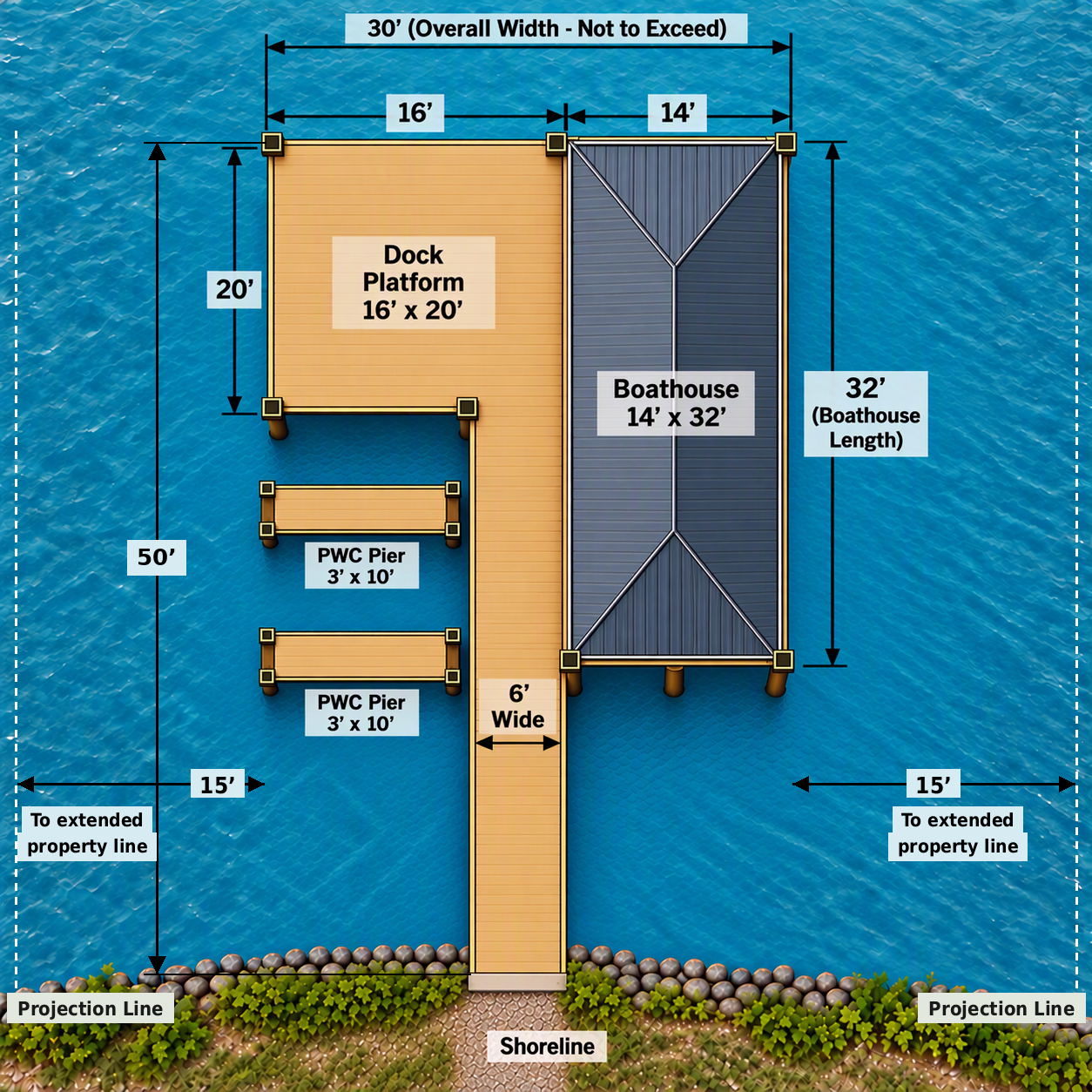
Single Stall
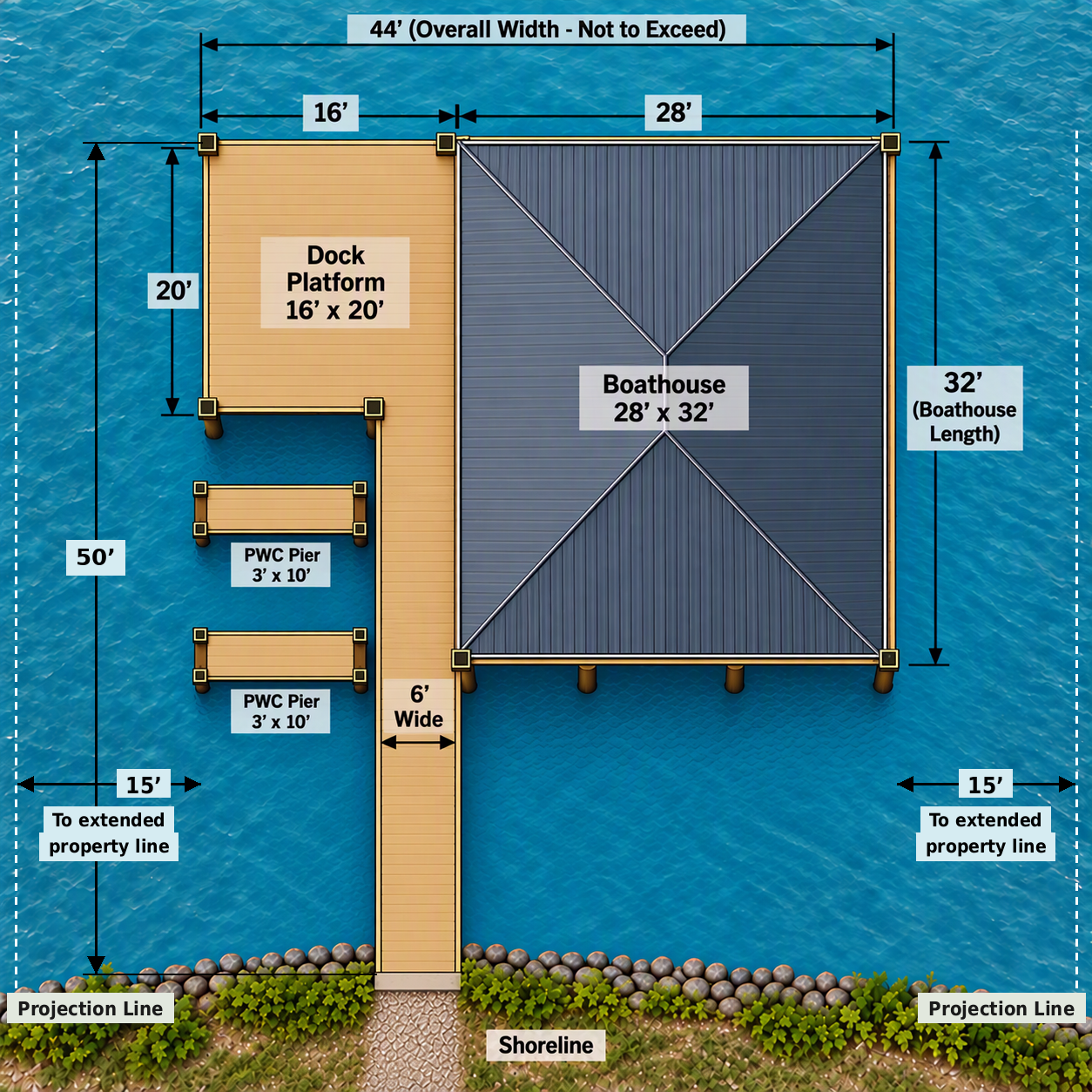
Double Stall
Details
Any lot platted after the year 2000 must have at minimum 100’ straight line shoreline (pin to pin) as well as 100’ at the project boundary/Georgia Power property to qualify for any shoreline structures other than a seawall.
Lots platted BEFORE the year 2000 must have a minimum of 75’ straight line shoreline (pin to pin) as well as 75’ at the project bound-ary/Georgia Power property may qualify for a single stall boathouse.
Lots with 100’ of shoreline or greater may qualify for a double stall boathouse.
Boathouses, like docks, must be a minimum of 15' from either side lot line including the projection of those lot lines into the lake. To avoid the potential of removal/relocation of a new boathouse, Georgia Power strongly encourages lake residents and their builders to locate these structures in the center 1/3 of the lot. Structures built inside 15' of the property line may be subject to modification or complete removal. Projected property lines cannot be expected to apply in every instance and are managed on a case-by-case basis.
A residential structure must be located on the lot (regardless of ownership type) before Georgia Power will permit boathouse construction.
New construction (including boathouse/dock combos) must be built so that a single walkway from shoreline leads to the combination structure.
Metal/aluminum carport covers are not allowed for use as a boathouse shelters.
Free standing boatlifts, outside the permitted roofline of a boathouse structure, are prohibited.
Boathouses must be open sided.
Georgia Power may allow TWO full size boat slips under the roofline of a double stall boathouse. If a lake resident elects to deck over one of their slips, we will allow this modification, but this is still considered a double stall boathouse.
At least one slip must remain open under the roofline of a double stall boathouse.
A storage room no greater than 5’ x 12’ is allowed under the roofline of a boathouse. Should be parallel with shoreline on the back side of boathouse structure.
A boatlift/lean too/additional covering etc. outside the maximum roofline dimensions of a single or double stall boathouse, is prohibited.
A single stall boathouse should not exceed 14’ wide x 32’ long (post to post/under roof) with a max roof overhang of 24”. Base of structure including outside walkways should not exceed 18’ x 32’. A single stall boathouse/dock combination structure may not exceed 30’wide x 32’ long. Post to post/under roof dimensions should not exceed 14’ wide x 32’ long. Total uncovered dock dimensions may not exceed 16’x20’ (see diagram).
A double stall boathouse should not exceed 28’ wide x 32’. These dimensions are post to post/under roof. Boathouse base should not exceed 32’ wide x 32’ long.
A double stall boathouse and dock combination may not exceed 44’ wide x 32’ long overall. Post to post/under roof dimensions should not exceed 28’ wide x 32’ long. Total dock platform dimensions, uncovered may not exceed 16’ wide x 20’ long.
Boathouse structures may not be constructed or renovated to allow temporary or permanent residence.
Plumbing and permanent appliances are not allowed.
No gas lines are allowed from shoreline to boathouse. Roofs should be constructed of shingle, nonglare baked on enamel or other nonglare surfaces.
Roof must be either hip or gable style and may not be less than a 3/12 or greater than 5/12 pitch.
Boathouse roof posts should be no greater than 9’ above dock height.
New rooftop sundecks are prohibited.
Any accessory item (such as PWC lifts) must fit inside the overall footprint of the existing building envelope, behind structure (boathouse/dock) or under roof line.
Boathouse Screens
Georgia Power may consider permitting semi-transparent screen installations on open-sided boathouse structures for the purpose of protecting watercraft/providing shade from ultraviolet exposure. Form-fitting boat covers are preferred and will offer the greatest protection from the elements.
Requests are reviewed on a case-by-case basis and may be denied by GPC. Any screen permitted by GPC must adhere to the following:
- Plans shall be submitted and approved by GPC prior to installation.
- Plans must be specific regarding screen material, color (Black or Grey), and where the screens will be installed.
- Only semi-transparent screens will be permitted.
- Screening is restricted to TWO sides of boathouse (no screens on ingress/egress opening to boathouse).
- Permanent screens (installed within frames) are not allowed.
- Screens must be retractable and should be in the “rolled up” position when not in use.
Non-Compliant Screening – These items are subject to removal:
- Non-semi-transparent screening material (canvas, solid blinds, banners, flags, etc.).
- Any screening material not specifically designed for the purpose of protecting watercraft or providing shade from ultraviolent exposure.
- No logos, symbols, signage, etc. may be imprinted on screens.
North Georgia Boathouses
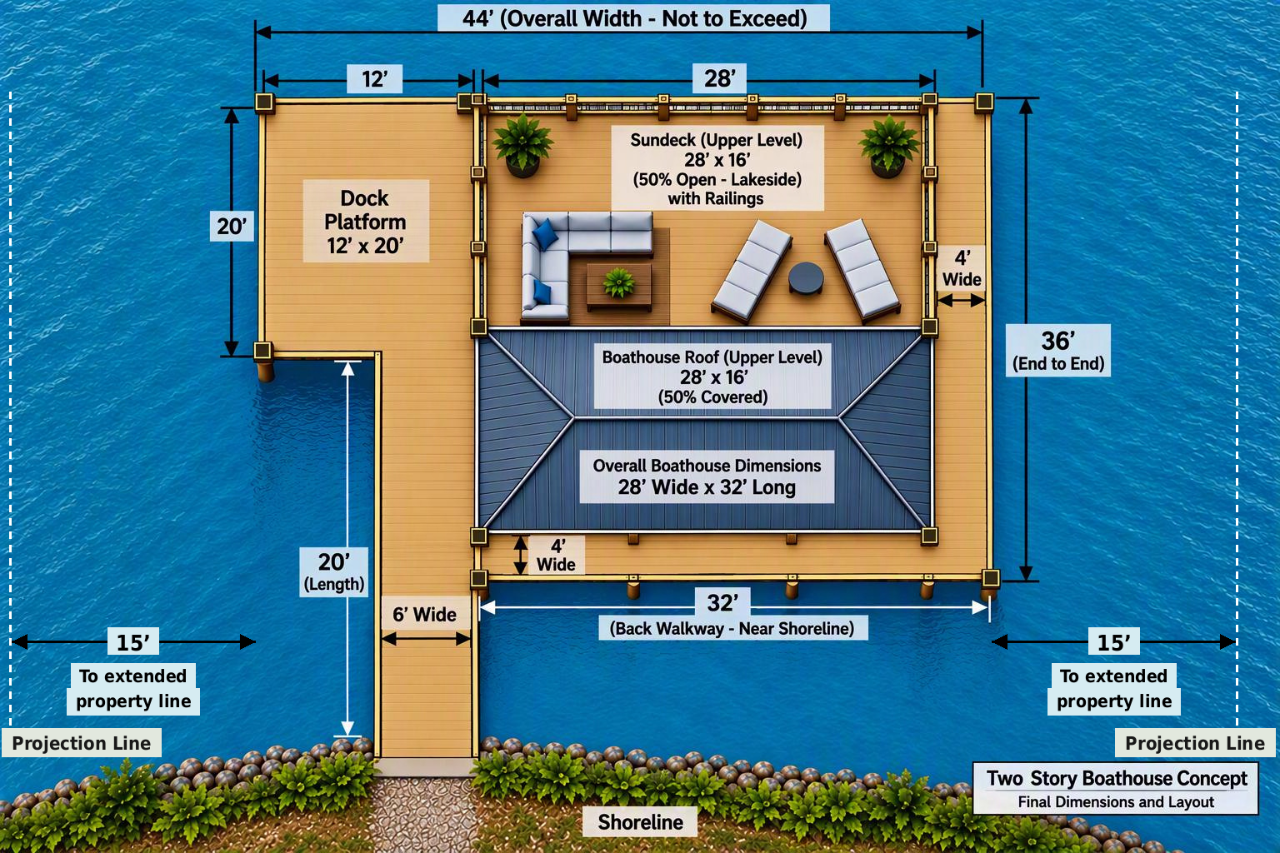
Any lot platted after the year 2000 must have at minimum 100’ straight line shoreline (pin to pin) as well as 100’ at the project boundary/Georgia Power property to qualify for any shoreline structures other than a seawall.. Lots with 100’ of shoreline or greater may qualify for a boathouse. A residential structure must be located on the lot (regardless of ownership type) for a boathouse to be permitted. Boathouses, like docks, must be a minimum of 15' from either side lot line including the projection of those lot lines into the lake. To avoid the potential of removal/relocation of a new boathouse, Georgia Power strongly encourages lake residents and their builders to locate these structures in the center 1/3 of the lot. Structures built inside 15' of the property line may be subject to modification or complete removal
Projected property lines cannot be expected to apply in every instance and are managed on a case-by-case basis. New construction (including boathouse/dock combos) must be built so that a single walkway from shoreline leads to the com-bination structure.
Metal/aluminum carport covers are not allowed for use as a boathouseshelters.
Free standing boatlifts, outside the permitted roofline of a boathouse structure, are prohibited. Georgia Power may allow TWO full size boat slips under the roofline of a double stall boathouse. A boatlift/lean too/additional covering etc. outside the maximum roofline dimensions of a single or double stall boathouse, is prohibited.
A single stall boathouse only should not exceed 14’ wide x 32’ long. These dimensions are wall to wall/under roof with a max roof overhang of 24”. The base on which the boathouse is built, including outside walkways, should not exceed 20’ wide x 36’long.
A single stall boathouse/dock combination structure may not exceed 30’wide x 36’long. Wall to wall/under roof dimensions should not exceed 14’ wide x 32’ long. Total uncovered dock dimensions may not exceed 12’x20’.
A double stall boathouse only should not exceed 28’ wide x 32’ long. These dimensions are wall to wall/under roof with a max roof overhang of 24”. The base on which the boathouse is built, including outside walkways, should not exceed 36’ wide x 36’ long.
A double stall boathouse and dock combination may not exceed 44’ wide x 36’ long overall. Wall to wall/under roof dimensions should not exceed 28’ wide x 32’ long. Total dock dimensions, uncovered may not exceed 12’ wide x 20’ long.
PWC lifts are encouraged to be placed inside boathouse or behind boathouse.
Boathouse structures may not be constructed or renovated to allow temporary or permanent residence. Plumbing and permanent appliances are not allowed. No gas lines are allowed from shoreline to boathouse. Roofs should be constructed of shingle,nonglare baked on enamel or other nonglare surfaces.
Sundeck may be partially (50% maximum) covered. Maximum roofed/covered area on second level is 16’ long beginning from back wall. Total covered area should be 16’ long x 28’ wide with a maximum roof overhang of 24”.
On boathouse with second level, the back wall and 4’ of side wall may be solid or have windows or screen, while the front and remaining sides (under roof) must be open or screened.
Fireplaces/Chimneys on boathouses must be installed either in the back wall or within the 4’ corner wall.
Catwalks or suspended walkways may be used to access boathouse decks. These walkways may not be longer than 25’. Steps will be required for the distance remaining.
Maximum peak roof height is 32’ from the normal operating water level, this includes everything, chimney top, weather vane, etc. The boathouse platform level should be a minimum of 2’ above the normal operating level of the lake.
Seawalls
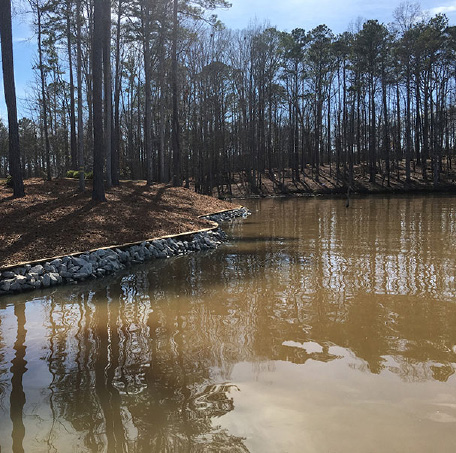
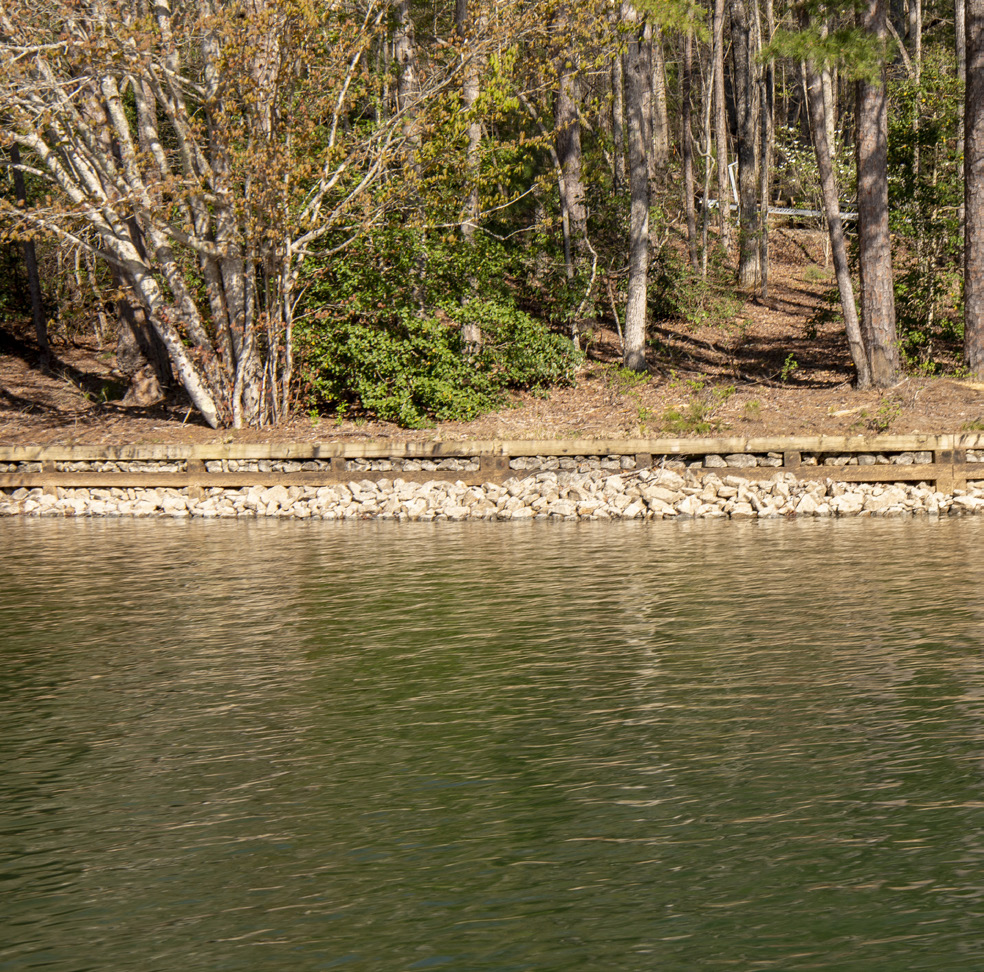
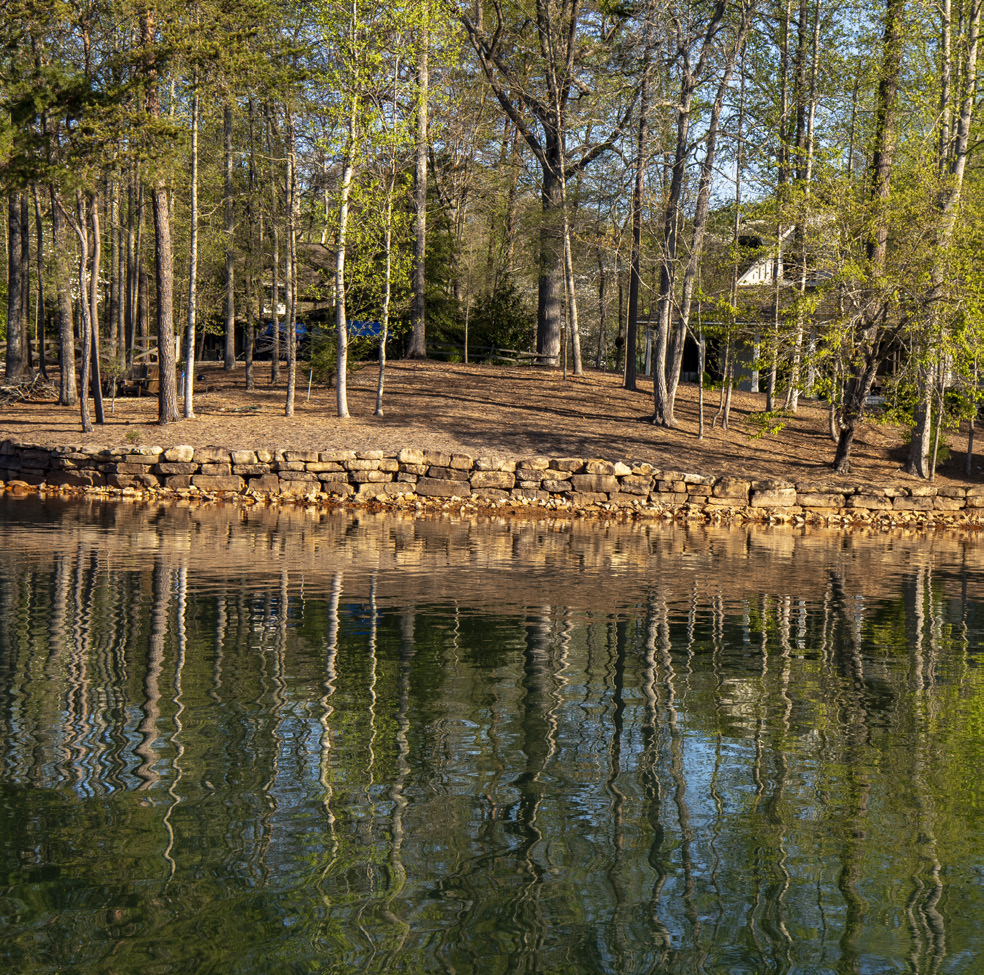
Permission from GPC prior to the installation of any type of shoreline abutment is required.
New seawall requests are only permissible on shorelines with evident cut bank erosion.
New seawall requests must provide applicable county and state permits as required.
Where wetlands are present on a shoreline, no shoreline abutment of any type will be permitted.
Rip Rap is required on the lakeside of any new seawall or seawall replacement. It may also be required on seawalls needing extensive repairs.
Not all counties on Georgia Power lakes can or will approve the installation of new seawalls. This is the discretion of the county, not Georgia Power.
A landscape or mitigation plan may be required for any newly constructed seawall. Please consult with your Georgia Power Lake Resources representative when requesting a permit.
Georgia Power encourages the installation of rip-rap seawalls in lieu of other shoreline abutment alternatives. If properly installed, they are highly effective at stabilizing shoreline and providing aquatic habitat and typically require less disturbance upon installation and less long-term maintenance comparative to other options.
Prior to completion, every new wall must be backfilled and stabilized with silt fence, straw and other best management practices. Silt fence should be removed after reestablishment of vegetation.
Constructed seawalls can be wood, concrete, block (filled with concrete), bioengineered or vinyl and must be constructed as close to existing shoreline as reasonably possible – not in a way to reclaim any “lost frontage”.
Installation of filter fabric material behind most seawall types is required.
In instances where a new seawall is requested to replace an existing seawall, the new wall should be in the footprint of the existing wall being removed or in a location acceptable to GPC. Location and placement of turbidity and or silt screen must be noted in the permit application.
Seawall construction should minimize disturbance within the state waters buffer to maximum extent practicable.
A Turbidity barrier is required to be in place before the removal of an existing seawall. This barrier must remain in place until the new seawall is complete.
North Georgia Docks
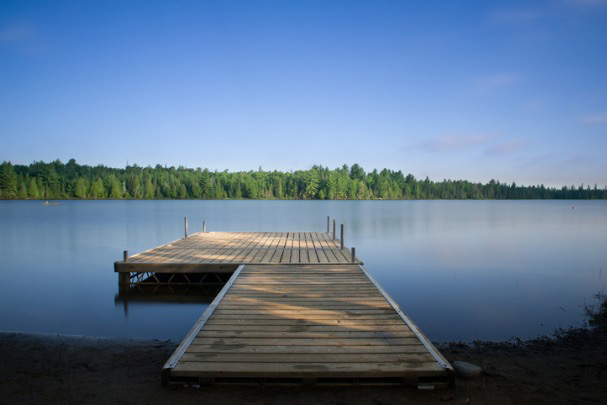
Flag Dock
Any residential lot platted/surveyed/re-surveyed after the year 2000 must have a minimum of 100’ straight line (pin to pin) shoreline to have any shoreline structure other than a seawall.
Projected property lines cannot be expected to apply in every instance and are managed on a case-by-case basis.
Maximum dock dimensions will not exceed 16’x20’ or 320 Square feet, when permitted by GPC. However, dimensional variations may be applicable in some cases.
It is encouraged that the dock be located in the center 1/3 of the lot.
Maximum distance of dock outreach from shoreline should not exceed 50’ and cannot extend more than 1/3 distance across a cove, if in a cove setting.
The nearest point of a dock to the property line projection, both at shoreline and into water, should be no less than 15’.
The flag dock is the Georgia Power standard configuration for new dock construction.
It is encouraged that docks be placed in the center one-third of lot for possible future combination enhancement.
The dock’s primary offshore walkway should be at least 4’ wide and should not exceed 6’ wide.
Metal/aluminum carport covers are not allowed for use as dock shelters.
Free standing boatlifts, outside the roofline of a boathouse structure, are prohibited.
Other than water spigots, no plumbing is allowed.
*** If a future boathouse is requested as a combination structure to an existing dock that meets the boathouse criteria, the dock will require modification to adhere to dimensional requirements for a dock/boathouse combination structure.
North Georgia Docks
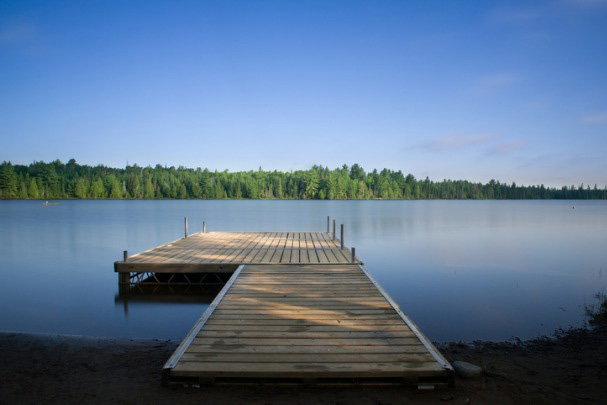
Flag Dock
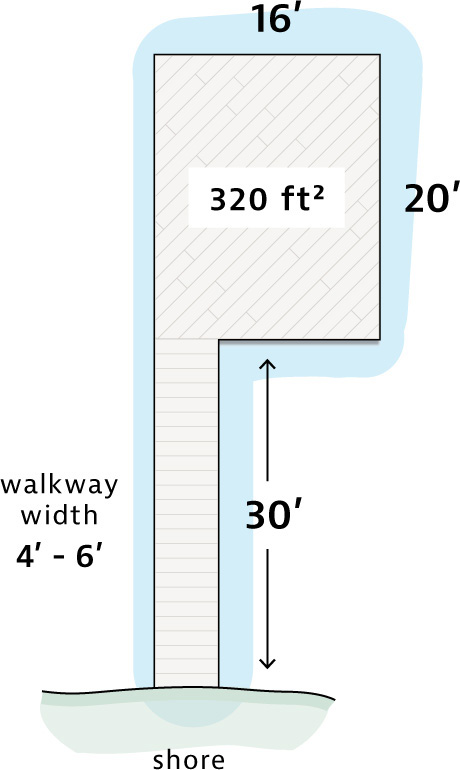
Any residential lot platted/surveyed/re-surveyed after the year 2000 must have a minimum of 100’ straight line (pin to pin) shoreline to have any shoreline structure other than a seawall.
Lots platted BEFORE the year 2000 must have a minimum of 50’ straight line shoreline (pin to pin) before being considered for a dock.
Projected property lines cannot be expected to apply in every instance and are managed on a case-by-case basis.
Maximum dock dimensions will not exceed 16’x20’ or 320 Square feet, when permitted by GPC. However, dimensional variations may be applicable in some cases.
It is encouraged that the dock be located in the center 1/3 of the lot.
Maximum distance of dock outreach from shoreline should not exceed 50’ and cannot extend more than 1/3 distance across a cove, if in a cove setting.
The nearest point of a dock to the property line projection, both at shoreline and into water, should be no less than 15’.
The flag dock is the Georgia Power standard configuration for new dock construction.
It is encouraged that docks be placed in the center one-third of lot for possible future combination enhancement.
The dock’s primary offshore walkway should be at least 4’ wide and should not exceed 6’ wide.
Metal/aluminum carport covers are not allowed for use as dock shelters.
Free standing boatlifts, outside the roofline of a boathouse structure, are prohibited.
Other than water spigots, no plumbing is allowed.
*** If a future boathouse is requested as a combination structure to an existing dock that meets the boathouse criteria, the dock will require modification to adhere to dimensional requirements for a dock/boathouse combination structure.
Lake Oconee Boat Lifts
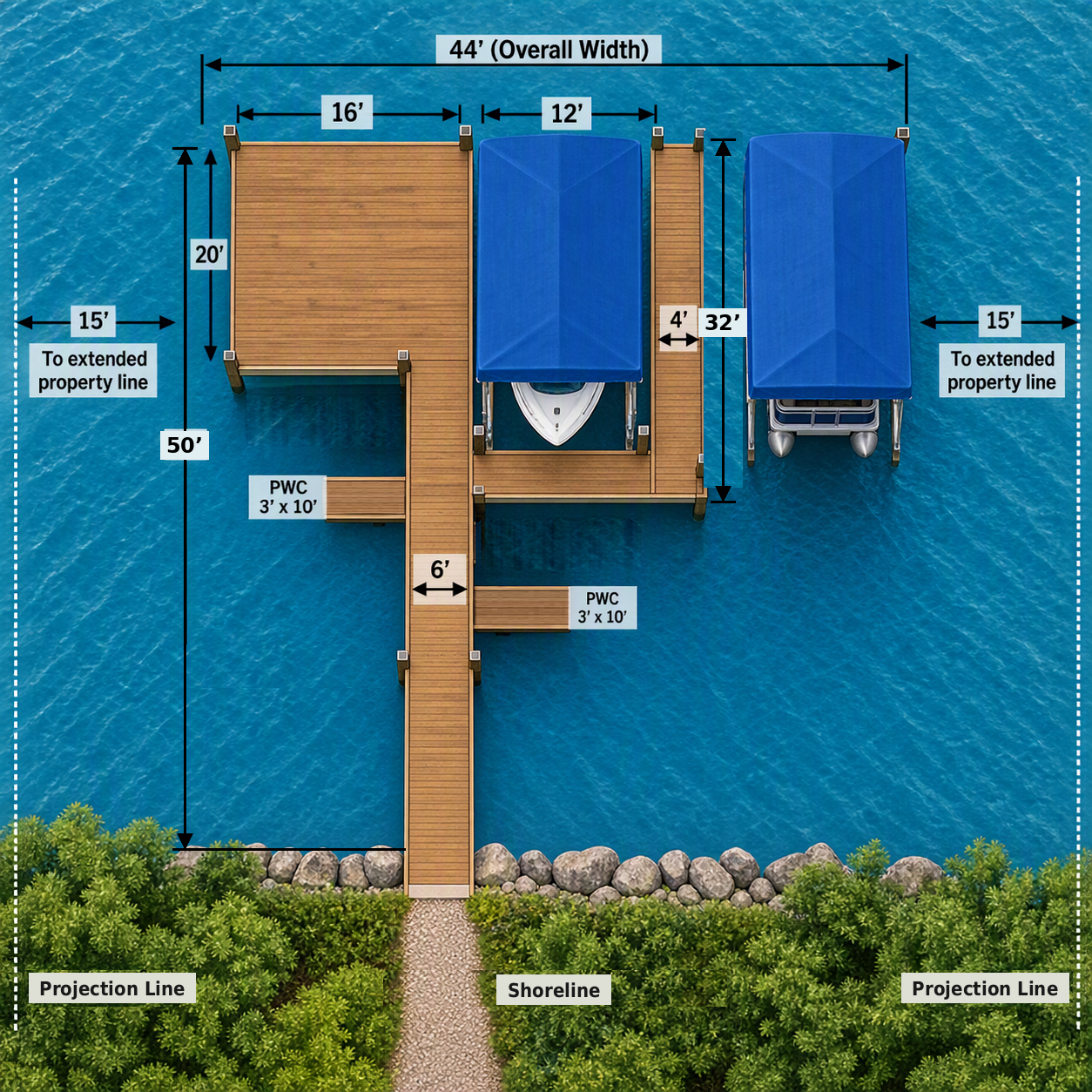
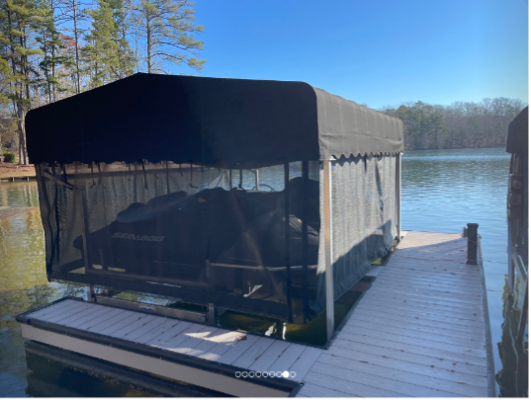
Boatlift Screen Examples
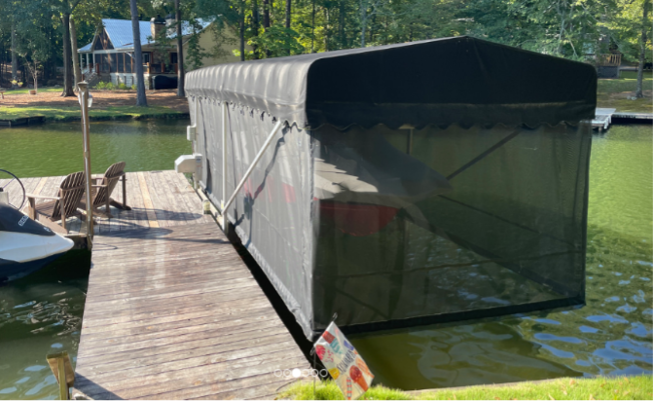
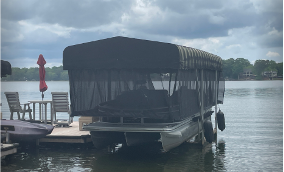
Boatlifts and PWC lifts are specifically intended for private, single family residential shoreline structures and may not be placed on multi-family, common, group use or commercial docks.
Boatslips
Lake Oconee permits only a single boatslip configuration of 16’ wide x 32’ deep off a private residence dock.
Boatslip walkways cannot be greater than 6’ wide on main walkway and no greater than 4’ wide on the outside slip walkway —slip width/depth is directly influenced by walkway width.
Boatlifts
Lake Oconee is the only Georgia Power lake that permits free-standing boatlifts.
Georgia Power may permit a total of two boatlifts on single resident private dock.
If a structure can house two boatlifts, one must be placed inside of boatslip.
Boatlifts are considered an extension of dock and must be 15’ off projected side property lines, measured from edge of lift to property line projection both onshore and extended outward into lake. This is at Georgia Power’s sole discretion and cannot be expected to apply in every circumstance.
A maximum of two boatlift canopies are allowed per shoreline structure. Canopies must be canvas, vinyl or a similar soft-sided material with a dome-shaped top.
Canopies can be no higher than 9’ above deck height of dock and sides cannot extend down more than 3’ from top of canopy frame.
Boatlift Screens
- Form-fitting boat covers are preferred and more effective in protecting boats from the elements.
- Semi-transparent screening may be allowed on boatlifts with canopies ONLY for the purpose of protecting watercraft from ultraviolet damage. Requests are reviewed on a case-by-case basis and may be denied by GPC.
The following must be adhered to prior to obtaining a permit:
- Plans shall be submitted and approved by GPC prior to installation.
- Only semi-transparent screens are allowed.
- Plans must be specific regarding screen material, color (Black or Grey), and location of screens will be installed.
Non-Compliant Screening — These items are subject to removal:
- Non-semi-transparent screening material.
- Any screening material not specifically designed for the purpose of protecting watercraft housed on free standing boatlifts ONLY.
- If a dock has two boatlifts that are requested to be screened, no additional portion of dock or accessories (PWC lifts, dock platform, etc.) may be screened.
- No logos, symbols, signage, etc. may be printed on screens.
- Permanent screens (installed within frames).
- Screens must be retractable and should be in the “rolled up” position when not in use.
PWC Lifts
PWC lifts must be located inside the building envelope of the structure (i.e. behind dock, boatslip) and may not be separate from the dock/boatslip.
If a shoreline structure has two boatlifts, a total of 4 PWC lifts may be allowed so long as they can be located within the building enve-lope (behind dock, boatslip) of structure.
PWC lifts may not be covered with a canopy if boatlifts are already covered.
Solar Panels
A maximum of 2 solar panels, 2’x2’ in dimensions, may be installed on free standing boatlifts for operating lifts.
Lake Oconee Docks
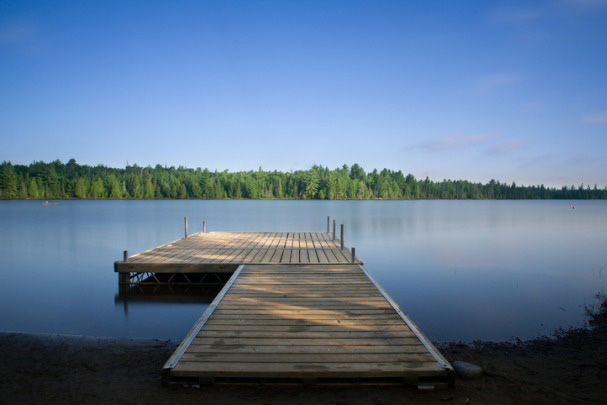
Flag Dock
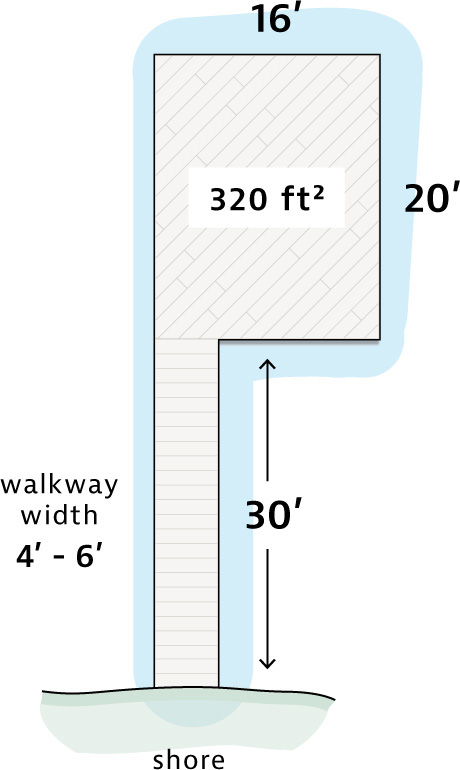
Any residential lot platted/surveyed/re-surveyed after the year 2000 must have a minimum of 100’ straight line (pin to pin) shoreline, along with 100’ width at the Georgia Power project boundary to have any shoreline structure other than a seawall.
Lots platted before the year 2000 must have a minimum of 100’ width at the Georgia Power project boundary and at least 50’ straight line (pin to pin) at shoreline before GPC will consider a docking structure.
Maximum dock dimensions will not exceed 16’x20’ or 320 Square feet, when permitted by GPC. However, dimensional variations, such as 10' x 32', may be applicable in some cases.
Maximum distance of dock outreach from shoreline should not exceed 50’ and cannot extend more than 1/3 distance across cove, if in a cove setting.
The nearest point of a dock to the property line projection, both at shoreline and into water, should be no less than 15’.
The flag dock is the Georgia Power standard configuration for new dock construction.
It is encouraged that docks be placed in the center one-third of lot for possible future combination enhancement.
The dock’s primary offshore walkway should be at least 4’ wide and should not exceed 6’ wide.
Metal/aluminum carport covers are not allowed for use as dock shelters.
Other than water spigots, no plumbing is allowed.
Lake Sinclair Docks
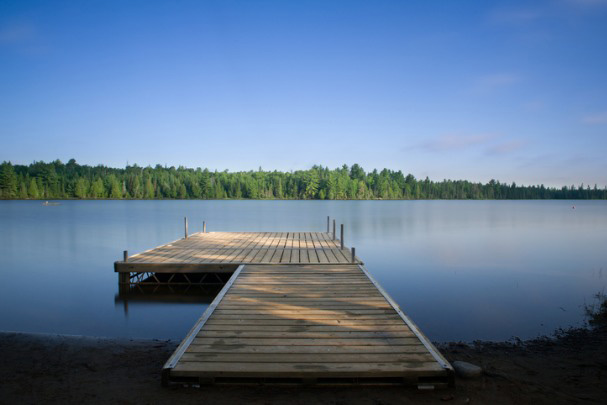
Flag Dock
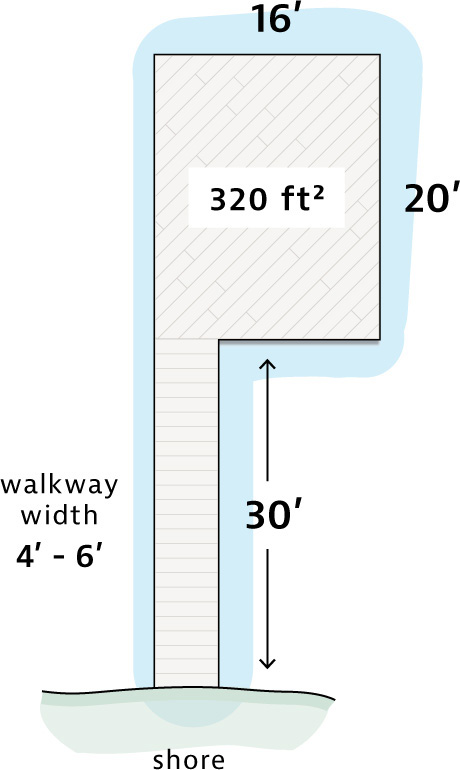
Any residential lot platted/surveyed/re-surveyed after the year 2000 must have a minimum of 100’ straight line (pin to pin) shoreline, along with 100’ width at the Georgia Power project boundary to have any shoreline structure other than a seawall.
Lots platted before the year 2000 must have a minimum of 50’ width at the Georgia Power project boundary and at least 50’ straight line (pin to pin) at shoreline before GPC will consider a docking structure.
Maximum dock dimensions will not exceed 16’x20’ or 320 Square feet, when permitted by GPC. However, dimensional variations, such as 10' x 32', may be applicable in some cases.
Maximum distance of dock outreach from shoreline should not exceed 50’ and cannot extend more than 1/3 distance across cove, if in a cove setting.
The nearest point of a dock to the property line projection, both at shoreline and into water, should be no less than 15’.
The flag dock is the Georgia Power standard configuration for new dock construction.
It is encouraged that docks be placed in the center one-third of lot for possible future combination enhancement.
The dock’s primary offshore walkway should be at least 4’ wide and should not exceed 6’ wide.
Metal/aluminum carport covers are not allowed for use as dock shelters.
Other than water spigots, no plumbing is allowed.
Docks | Bartletts Ferry, Jackson, & Sinclair
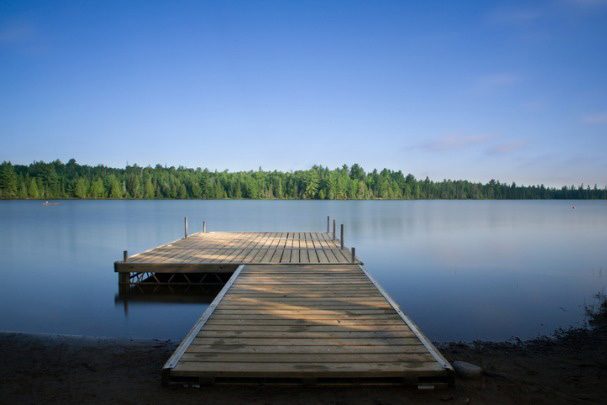
Flag Dock
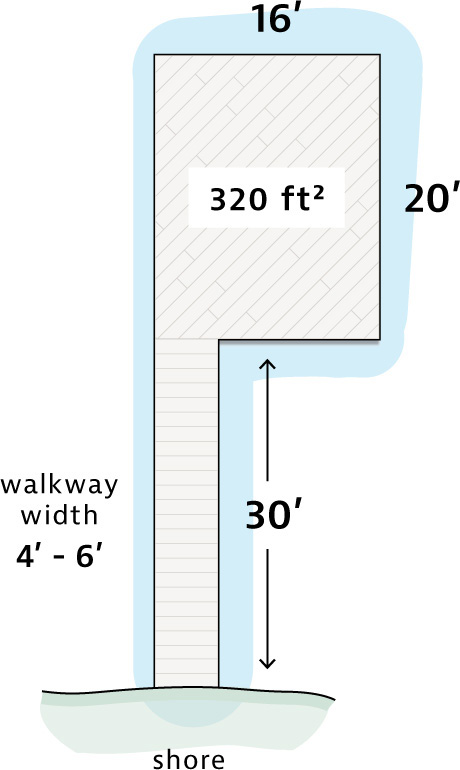
Any residential lot platted/surveyed/re-surveyed after the year 2000 must have a minimum of 100’ straight line (pin to pin) shoreline to have any shoreline structure other than a seawall.
Lots platted before the year 2000 must have a minimum of 50’ straight line shoreline (pin to pin) before GPC will consider a docking structure.
Maximum dock dimensions will not exceed 16’x20’ or 320 Square feet, when permitted by GPC. However, dimensional variations may be applicable in some cases.
Maximum distance of dock outreach from shoreline should not exceed 50’ and cannot extend more than 1/3 distance across a cove, if in a cove setting.
The nearest point of a dock to the property line projection, both at shoreline and into water, should be no less than 15’.
The flag dock is the Georgia Power standard configuration for new dock construction.
It is encouraged that docks be placed in the center one-third of lot for possible future combination enhancement.
The dock’s primary offshore walkway should be at least 4’ wide and should not exceed 6’ wide.
Metal/aluminum carport covers are not allowed for use as dock shelters.
Other than water spigots, no plumbing is allowed.
Tree Removal & Landscaping
Outdoor Living
Georgia Power’s shoreline management plan has been designed to protect lakeshore property while improving water quality and the local environment.
Typical landscaping practices can harm lake water quality. Tree removal can have a detrimental impact to soil stability, run-off and sediment loading. Shoreline landscaping with a grass lawn and mowing all the way to the shore increases stormwater runoff. Runoff pollutes lake waters by carrying fertilizer, pet waste, sediments and pesticides. Improperly discarded grass clippings further pollutes lake waters with excessive nutrients. Landscaping to the water’s edge can increase soil erosion as grass and many cultivated landscaping plants are not deeply rooted. Those factors decrease habitat for wildlife and scenic natural views.
By restoring or maintaining native shoreline plants and trees, the local environment and the overall health of our waterways is improved. Shorelines should be filled with a mix of native trees, shrubs and perennial plants.
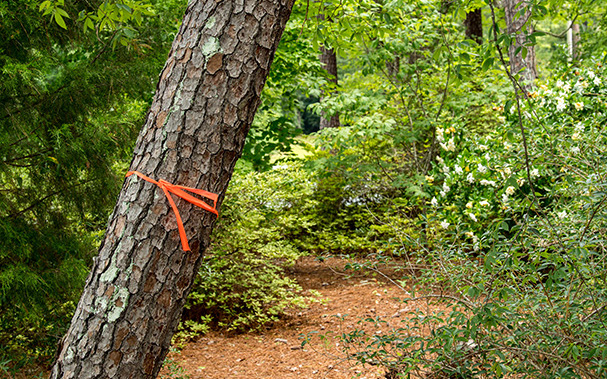
Tree Removal
Unauthorized clearing of Georgia Power project lands or within 25’ of the shoreline (whichever is greater) is prohibited.
In instances where existing shoreline structures (dock, boathouse) are present, Georgia Power reserves the right to require the complete removal of these structures at owner’s expense should unauthorized clearing occur. Further, a detailed revegetation/restoration plan must be provided and loss of consideration for lake use permitting activities for a time determined by Georgia Power or dependent on re-vegetation efforts and success.
Tree removal is the responsibility of license/lessee — Georgia Power is not responsible for damaged, diseased or dead trees on our property. You must have Georgia Power’s permission to remove any tree from Georgia Power’s property or project lands.
Permit applications must include:
- Accurate number of trees to be removed.
- Size (diameter) and species of trees requested for removal.
- The reason for requested removal.
- Photos of the shoreline from lake along with photos of project boundary if applicable.
- Proposed replanting or mitigation measures and any other information relevant to review of the request (including any additional information Georgia Power may require).
- Incomplete applications will not be considered.
Georgia Power considers tree removal requests under the following conditions:
- Dead or damaged tree(s) that pose a hazard.
- Facilitation of construction, i.e. home, seawall, septic installation, etc.
- To enhance conservation value.
When tree cutting is allowed, Georgia Power requires replanting at a 1:1 ratio. Larger trees subject to removal will require larger caliper replacement requirements or multiple trees to replace tree removed. Georgia Power reserves the right to require specific sizes and species of trees to be replanted, with a standard replacement diameter of 3”.
Landscaping
Georgia Power, at our sole discretion, will require a landscaping plan if trees on Georgia Power property are permitted for removal or if property owner intends to do any land disturbance inside Georgia Power property or the 25’ buffer – whichever is greater.
Added or replaced trees/shrubs should be native to the area species.
Irrigation pumps for 'Lakefront' single family residential homes directly adjacent to Georgia Power’s land are allowed so long as pumps are placed on land (centrifugal), do not exceed a 2.5 HP maximum, and are installed and wired by a licensed electrician.
A single walkway path is allowed on Georgia Power’s land to shoreline structures and should not exceed 4’ in width.
Recirculating water features are not permissible on Georgia Power’s property and will be subject to removal upon discovery.
Georgia Power discourages the planting of turfgrass within the project boundary or 25’ state vegetative buffer as a measure to help protect/enhance water quality. Where turfgrass is desired and permissible, Georgia Power may allow a certain percentage of approved turfgrass. There are some locations on our lakes where no percentage of turfgrass on Georgia Power land is permissible. Contact your appropriate Georgia Power Lake Resources Office for clarification.
Leaves, lawn clippings and the like should not be disposed of in Georgia Power lakes — licensees/lessees utilizing landscaping/maintenance services are ultimately responsible for the actions of these hired services.
Drainage pipes, regardless of origin, are not permitted to run across GPC property/project boundary. Pipes must terminate at Georgia Power property/project boundary and transition to swales, French drains, dry creek beds, etc.
Softscapes – Enhanced Natural Areas
Softscapes/enhanced natural areas utilize organic or natural materials that can accentuate an area with minimal impact to the surroundings. Mulch, loose pea gravel, slate chips, loose flagstone/fieldstone could all be used for a natural sitting area. These areas should remain free of mortar, grout or similar binding substances, especially if the requested location is on Georgia Power property. *Due to Georgia Power’s ownership rights on Lake Oconee, we would only consider softscapes as an option.
Georgia Power permission is required to install the above type sitting area and detailed plans must be submitted to Georgia Power prior to any installation.
Fixed seating is prohibited; only portable seating.
A fire ring or portable fire pit is allowed.
Any mortared installations are subject to removal.
No ground disturbance such as grading or leveling is allowed via mechanical equipment.
Man-made beaches are NOT allowed along the shoreline or on Georgia Power property.
No additional sand may be added to an existing natural beach either along the shoreline or on Georgia Power property.
Hardscapes
Hardscape installations are considered permanent fixtures. Pavers, mortared slabs, mortared fieldstone/flagstone, etc., that are adhered with grout, gator dust or similar binding substances constitute a hardscape feature.
In no instance are hardscapes allowed/permissible on Georgia Power property at Lake Oconee. Georgia Power permission is required and detailed plans must be submitted prior to construction. On deeded/private lots, hardscapes should be outside of the project boundary (lake-specific).
On Georgia Power Company residential lease lots, these installations must be 50’ from the shoreline and may not include any type of roof cover over the structure.
County approval in addition to GPC permission may also be required.
In some instances, subdivision/community covenants could also apply.
Fences
Fences are not permitted inside the project boundary.
- Fence requests on GPC lakes require permission from GPC before installation.
- On full residential lease lots (company owns entirety of lot), fence requests must be submitted to Georgia Power for review. An updated survey may be required. Any fence installed without a permit is subject to removal at the lessee’s expense.
- On access lots where fee simple land terminates at Georgia Power land (project boundary) the fence must terminate at this intersection. A survey will be required if Georgia Power’s land is not clearly identifiable on lot.
- On private/deeded lots, fences will not be permitted within the project boundary or within Georgia Power’s land rights.
- Under no circumstance may a fence run adjacent to or into the lake.
- If Georgia Power permits a fence, it may only be constructed of decorative wrought iron, aluminum or black chain link and cannot exceed 4’ in height.
Outdoor Lighting
- Installing the wrong type of lighting on shoreline structures on GPC lands can lead to light pollution, complaints from neighboring residents, unintentional safety hazards for boaters and can have a negative impact on wildlife. If GPC determines that light(s) are a nuisance, we reserve the right to require modification or removal.
- Lights on shoreline structures should be low voltage and preferably on a timer or on/off switch.
- Elevated lights should be shielded so that the light is cast downward, not outward.
- Flood lights are not permitted.
- Underwater lights are not permitted.
Solar Panel Guidelines
- GPC does not allow solar panel installation within the project boundary of our lakes including on docks, boathouses or other shoreline structures.
- If considering solar panel installation for a dwelling on a GPC Residential Lease lot, please contact your local lake resources office to ensure the installation is permissible prior to proceeding.
Swim Buoy Guidelines
- Are permissible on GPC lakes between Memorial Day thru Labor Day only.
- Maximum outreach of 50’ from shore or NO further than outreach of existing shoreline structure.
- May not impede normal boat navigation.
- Two swim buoys per residential lot.
- Any swim buoy that mimics a regulatory buoy (No Wake, No Boat, etc.) is prohibited and subject to removal upon discovery.
- Only GPC may install regulatory buoys—such as No Wake, No Boat, or other navigational markers—and only at the direction of the Georgia Department of Natural Resources (DNR).


