






Our crews are working around the clock.
Our monitoring systems detect outages when they occur, and our restoration teams always work hard to make each outage as brief as possible, because we understand how crucial electricity is to each and every one of us.
If you’re currently experiencing an outage, know that we’re working to fix it. We’re sorry for the inconvenience.
Who gets power restored first?
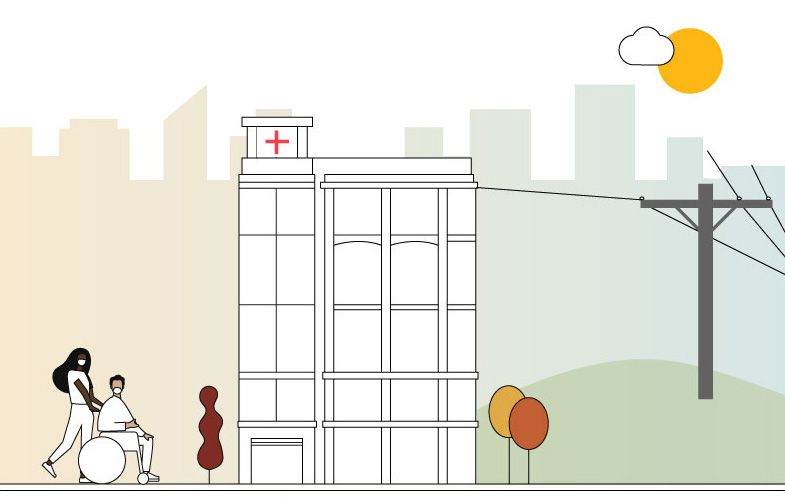
1. Vital Community Services
Restoring power to community and national security services, including hospitals, emergency and public safety services, military installations, and water and wastewater stations, is always first priority.
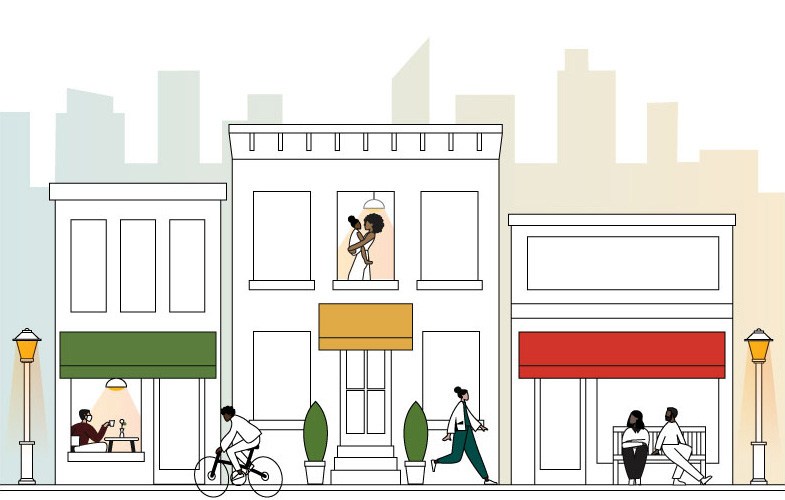
2. Highest Impact
Next, we focus on repairs that return power to the greatest number of customers in the least amount of time.
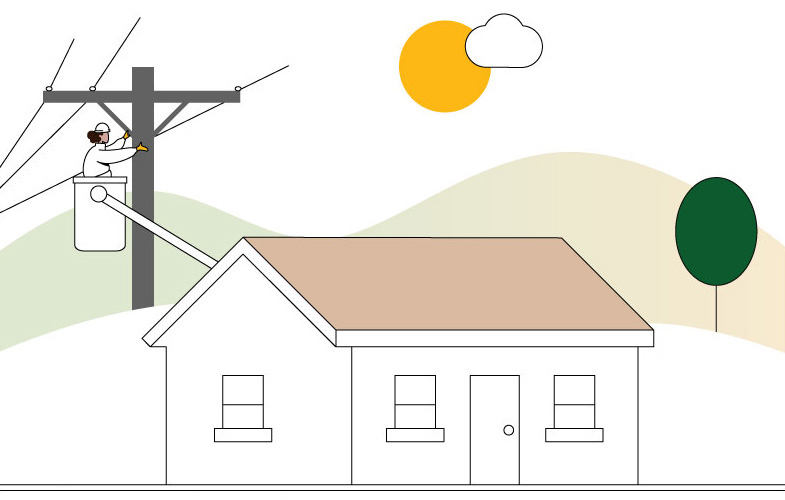
3. Smaller Lines
Finally, we repair smaller lines until crews get down to individual lines in neighborhoods. We won’t stop until power has been restored to every customer.
Obstacles to Restoring Power
Our Storm Center team is always tracking storms, and many times working crews are pre-staged in the path of the storm so that they can be ready to respond as quickly as possible, but to ensure that an outage event can be resolved safely, there are a lot of steps and measures that must be followed after a storm.


1. Identifying the Outage
When an outage event occurs, our system identifies it, directs crews to where the problem is located, and notifies the affected customers if they're signed up to receive outage alerts.
2. Safe Working Conditions
Our crews can't start the restoration process until conditions are safe. Often this is after the storm has passed, winds have died down both at ground level and up in the truck bucket, lighting isn’t in the area, and road conditions have improved.
3. Assessing Conditions
To know what crews and materiel needs to be dispatched in order to fix an outage event, our Damage Assessment Team will first inspect and detail the scene, and note if there are downed lines, trees, or other debris obstructing access. Based on their assessments, Estimated Restoration Times (ERTs) are set and specialized restoration crews are dispatched.
4. Working Around Dangerous Lines
Wherever lines are making contact with water, metal, surrounding buildings, or anything else around the scene that may be flammable or conduct electricity, our crews have to shut the circuit down to make sure there is no risk of starting fires or dangerous sparks.
5. Clearing the Scene
Often during a storm, falling trees or debris is the cause of an outage event. Before power can be restored, or line crews can gain access, these obstacles need to be removed—often by a vegetation management team.
6. Fixing the Problems
No matter the cause, an outage event can have many complexities. Whether it's a problem with a transformer, a broken pole, or downed line, our crews are trained and capable to deal with any issue affecting our lines.
7. Before Flipping the Switch
Sometimes the problem may be a damaged meter connection. In these situations our crews are unable to restore power as it could result in catastrophic damage to the home or the surrounding area. Our crews would in these cases place door hangers or otherwise attempt to notify the owner as it would be their responsibility to have a licensed electrician repair the service entrance that would notify us when it's ready to be connected.
"Why are restorations taking so long?"
Blocked or Dangerous Roads
Sometimes our crews simply can't reach heavily impacted areas to make repairs without first clearing debris or navigating traffic. If you're stuck on the road in bad weather, please move over for our crews - it's the law in Georgia.
Conditions on Ground vs. in the Air
Our highest priority is the safety of our crews and our customers, and even if conditions are mild at ground level, winds can be a lot worse 60 feet up in the air in a bucket.
Ongoing Vegetation Problems
Whether from wind or rain or ice, it doesn't take much for trees and limbs to break or fall and cause outages as the ground becomes saturated. This is often an ongoing situation for long after the actual storm has moved on.
Identifying Issues
Our systems know when and where service was interrupted, but before we can start working our Damage Assessment Teams have to identify the cause of the outage we won't know if there are trees on the line that have to be cleared, or if any equipment - like poles, wire, or transformers - have been damaged and need to be replaced.
Depending on how much of our infrastructure becomes impacted, even a single small outage event can sometimes be difficult to untangle.
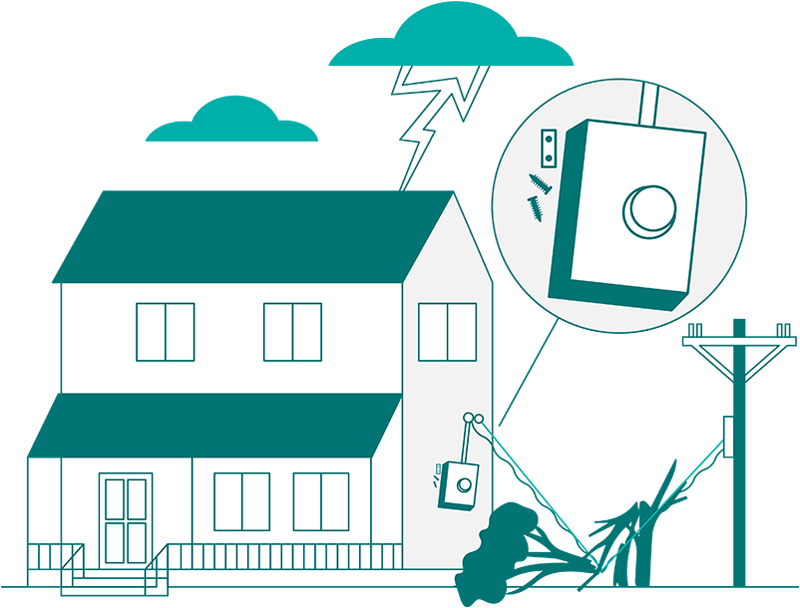
Damaged Meter or Service Entrance
This is the point at or near your power meter where our lines join with your home’s electrical wires.
If your meter or service entrance is damaged, we can't turn power back on for risk of shock or fire, until it's been repaired by a certified electrician. In these cases, where we can't restore power, our crews would place door hangers to notify the residents.
When the repair is complete, please call 1-877-749-3931 so that the reconnection of your service can be scheduled.
What does a damaged service entrance look like?
Here are a few examples of what a damaged service entrance could look like:
- Georgia Power service wires are down
- Mast pipe is bent
- Weather head is damaged or absent
- Service entrance has been pulled from house (i-bolt, screw knob, wire, or mast pipe)
- Meter base has been pulled from house
Repair Cost Assistance
If your service entrance is damaged during a major storm, you may be eligible for up to $450 in reimbursement to help offset repair costs.
This program is available to residential customers for their primary-owned residence. It is not available for commercial accounts, multi-family meter centers, rental properties, secondary homes, or other non-primary residences.
The program is activated only following a major storm—defined as an event that affects multiple regions across the state and/or causes widespread outages. It does not apply to routine outages.
To qualify, you must hire a certified electrician to complete the repairs.
Once repairs are complete, please call 1-877-749-3931 to initiate reconnection and request reimbursement.
The People Behind the Power
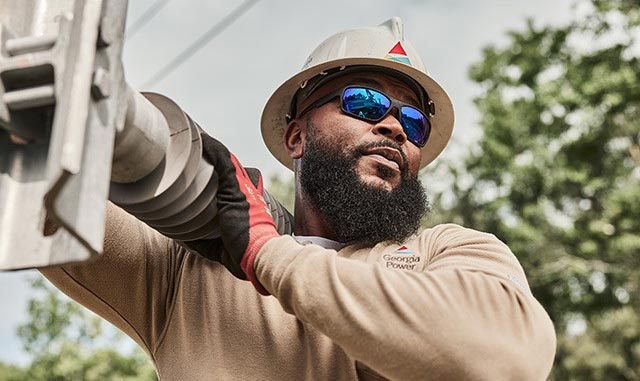
They weather storms and put it all on the line to keep our lights on. Our lineworkers play a vital role in working safely to keep communities connected across Georgia and providing the energy we all rely on.
If you’re currently experiencing an outage, know that we’re working to fix it. We’re sorry for the inconvenience.
Download the Georgia Power app:


Please call us at 1-888-891-0938 or call 911 to have the line barricaded until it can be repaired.
- Warn others to stay away.
- Always assume a downed power line is live and life-threatening. Keep children and pets away!
- Do not attempt to remove a person or animal caught in power lines. Call 911 for help!
- Do not attempt to remove tree limbs or any other object from a downed line.
Storm Resources
 Outage Resources

Outage Resources
If you’re currently experiencing an outage, know that we’re working to fix it.
 Prepare & Stay Safe

Prepare & Stay Safe
Prepare your home and keep your family safe through storms and outages.
 Storm Dangers
Storm Dangers
Learn about the dangers posed by different storms and what you can do to prepare.
 Emergency Resources

Emergency Resources
Local, state and federal resources to help you plan for and recover from disasters.
 Your Outage Helper
Are you currently experiencing an outage?
If you see a downed power line
NEVER touch power lines or anything making contact with power lines.
If you see a downed line, call 911, or us directly at 1-888-891-0938 to have the downed line barricaded until it can be repaired. Warn others to stay away.
- Don't approach! Never go near a downed power line.
Always assume a downed power line is live and life-threatening. Keep children and pets away!
- Don't touch!
Do not attempt to remove a person, animal, or object (such as a tree limb) making contact with a power line. Call 911 for help!
If you're in a car...
- Do not drive over a downed line or under a low-hanging line.
- Beware of downed lines touching a vehicle, and
stay away from the vehicle and the line. - If a power line hits your car while you’re inside, stay put and wait for help. If the car catches fire, then jump clear without touching metal and the ground at the same time. Shuffle away while keeping both feet on the ground.


