Investing in Flexibility: Battery Energy Storage Systems in Georgia

Discover how battery storage strengthens Georgia's grid by storing energy for use when demand rises
For most of the history of electricity, a power grid could only function if the supply of generated energy matched required demand in real time. And whenever demand surged, like during the mid-afternoon of a hot summer day, generation had to ramp up in lockstep, with no opportunity to store excess energy for when it’s needed most or give our generation sources the breathing room to operate more efficiently.
Thankfully, technology has advanced to shift this limitation and it’s something we at Georgia Power are excited about and actively investing in—Battery Energy Storage Systems (BESS).
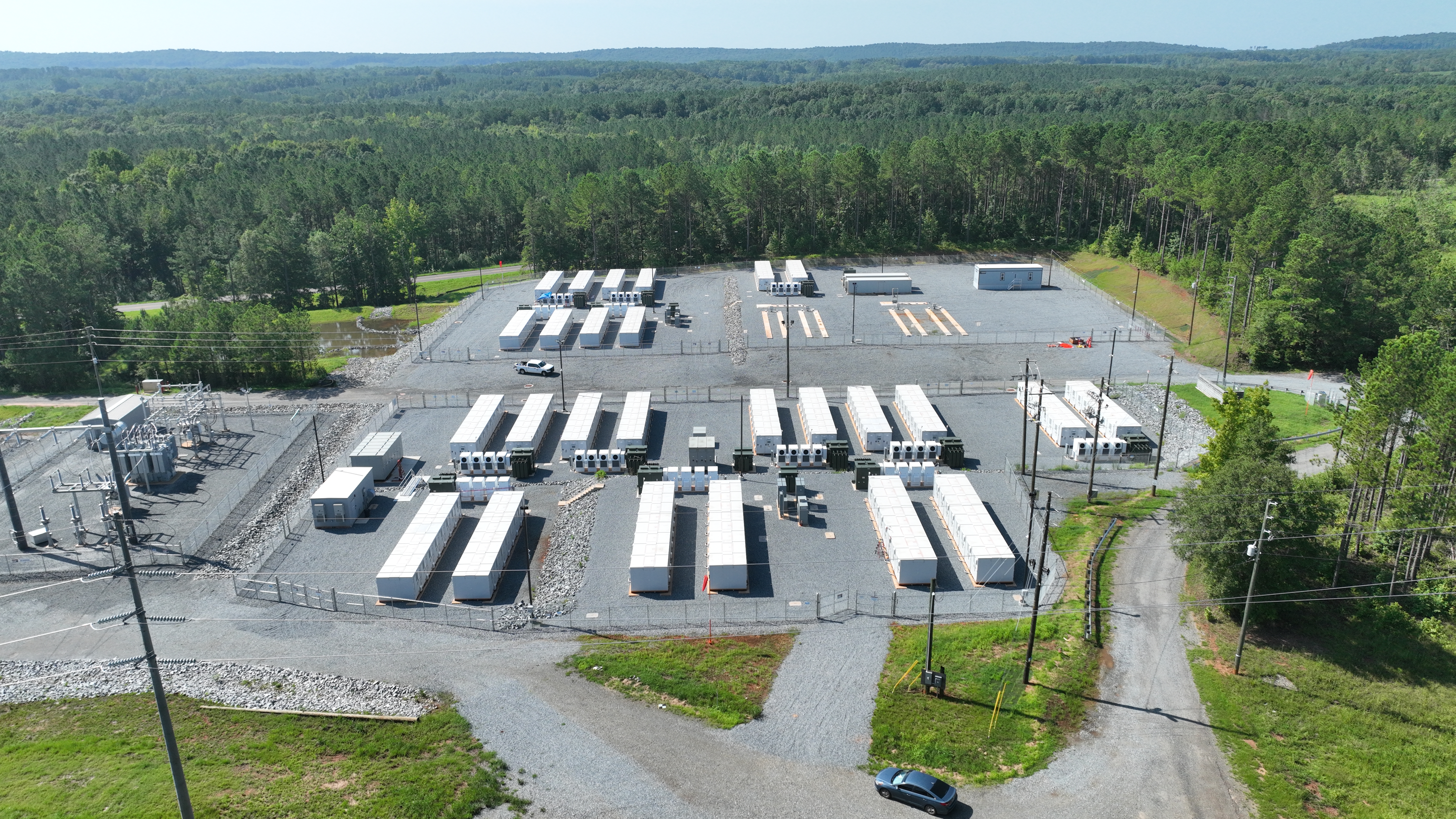
BESS are large banks of batteries wired directly into the power grid and work much like a portable charger for a cell phone, but on a significantly larger scale. The batteries charge when more electricity is generated than needed from our statewide diverse-energy mix , when demand and prices are both lower. The stored energy is then released from the batteries back into the grid when demand climbs and prices follow during peak hours, typically between 2-7 p.m., or when demand is higher than normal.
We charge these batteries during lower-cost hours and use that stored power later, reducing the cost on customer bills even when energy is being used during peak demand, pursuing two goals at the same time: helping lower costs while creating a more reliable grid.
In my 14 years at Georgia Power and from my current position leading our work on renewable and resilient generation, I can say I am personally excited about the investment we’re making in BESS. Not only does the technology improve reliability and keep prices affordable, but it can provide a direct benefit to Georgia Power customers, and at an opportune time.
Why We're Investing in BESS
Georgia's demand for electricity is increasing rapidly as our population and demand for energy, from commercial large-energy users and new residents alike, continue to grow. Meeting that growing demand means making sure all our generation sources, as well as transmission and distribution infrastructure, are not just up to date, but expanded responsibly to accommodate this change in demand. We have a duty to ensure our entire system continues to work together and generate the reliable energy we all depend on.
Our generation mix includes more solar and other intermittent resources than it did even five years ago. The role of BESS is not to replace our power plants or diverse energy portfolio which includes nuclear, coal, natural gas, hydropower, and renewables, but rather saving generated energy for hours after. Although BESS is not a multi-day backup supply for an entire region, it helps our resources work together more effectively, smoothing the demand peaks and valleys inside a single day.
A good example of how BESS works in real time is with solar energy generation. Because of weather and evening hours when the sun isn’t visible and solar generation isn’t possible, BESS can store it for use later.
Battery storage is just one piece of a deliberately diverse approach, where no single generation source carries the whole load. Batteries are very good at absorbing sudden demand swings and storing cheap power for later from multiple sources, not just solar.
We in Georgia aren’t the only ones who see the power of this investment. The U.S. Energy Information Administration (EIA) reports that utility-scale battery storage capacity in the U.S. topped 26 gigawatts in 2024, with more new capacity added that year than almost any other generation type except solar. In 2025, developers added nearly 16 gigawatts of new battery storage capacity, another record year, with 24 gigawatts projected for 2026. Our investment is part of a shift happening across the entire American grid.
Georgia Power currently has several BESS projects operating across Georgia, with additional facilities under construction or under regulatory review. Some sit alongside existing solar installations near military bases, adding storage capacity to solar facilities already feeding the grid.
Misconceptions About BESS
While there are clear benefits of BESS, there are also some misconceptions about the technology, with the most common concern around safety. That's a reasonable place to land, since this is still relatively new technology for most people.
The first concern people raise is whether we’re repurposing old car batteries. Let me be clear: We are not repurposing car batteries for BESS. Every battery we install is brand new and engineered specifically for grid-scale storage, not for vehicles—traditional or electric. There's no recycled or secondhand battery technology anywhere in our system.
The second concern I hear often about BESS is the fear of thermal runaway, a chain reaction inside a battery cell where heat builds on itself and can potentially lead to a fire. It's a real phenomenon, and some older battery chemistries in other states have experienced it. We at Georgia Power use lithium iron phosphate batteries, a chemistry that's significantly less prone to runaway events, and our facilities are designed to contain a thermal event rather than let it spread.
A related concern is whether a fire at one of these sites could contaminate nearby air or water. When a thermal event occurs, our preferred response is to allow the fire to consume itself rather than introduce water or chemical agents, which avoids adding contamination risk through runoff. We also don't wait until something goes wrong to bring the community in. Before the batteries are energized, we walk the local fire department through the technology, what could go wrong, and how to respond with the Fire & Risk Alliance helping run these sessions. By the time the batteries arrive, the firefighters who'd be first on scene have already seen the equipment and helped decide where the muster point should go. Fire chiefs who've been through this process tell us being looped in early, rather than handed a binder after the fact, has changed how they feel about a BESS facility showing up in their district.
Why This Matters Going Forward
For most people, the perception of all this will stay invisible, the way good systems usually do, but the benefit is clear: generated energy doesn’t go to waste, lights stay on during a heat wave, and your bill reflects the proactive planning going on behind the scenes.
Battery storage is built to keep doing exactly what it’s designed to do, seamlessly, reliably, and always with our customers’ safety in mind.


