From Outage to Restoration: How We Serve Customers Through Every Stage of a Storm

When storms hit and the lights go out, teams across Georgia Power are focused on getting them back on safely, as quickly as possible.
When the power goes out, most customers have one question: When will my lights come back on?
Reliable power keeps our communities moving, and when an outage occurs, our teams understand the importance of restoring service safely and quickly so customers can get back to the moments and routines that matter most.
Questioning when the lights will come back on is an understandable reaction. Power touches nearly every part of our daily lives, from keeping families comfortable and connected to supporting schools, businesses, hospitals, and public safety services.
While every outage and storm are different, our focus at Georgia Power never changes. We prepare ahead of time, responding when service is interrupted, and restoring power safely and as quickly as possible. For customers, restoration means getting back to everyday life. And for Georgia Power employees, it's a responsibility that begins even before the lights go out and continues after the last customers’ power is restored.
Before the Storm: Preparation is the First Step in Restoration
One of the most important parts of storm response happens before severe weather arrives.
Throughout the year, Georgia Power invests in maintaining and strengthening the electric system through infrastructure improvements, equipment inspections, and vegetation management programs that help reduce the impact of fallen trees and limbs on power lines.
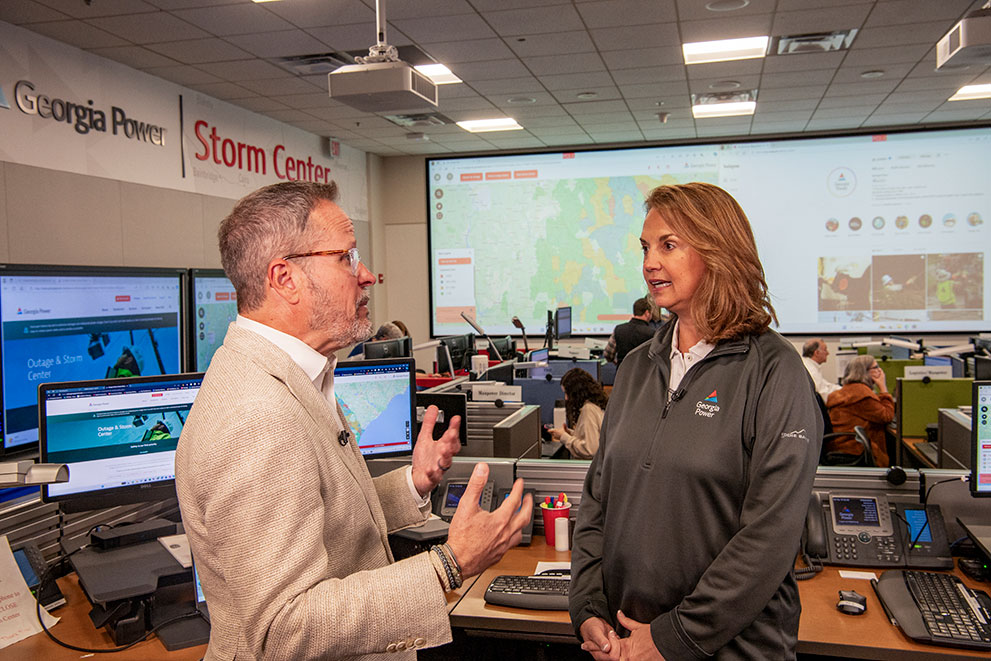
When our forecasters in our Storm Center begin tracking severe weather, teams across Georgia Power closely monitor changing conditions and coordinate response plans. Depending on the severity of the forecast, crews, equipment, and materials may be strategically positioned throughout the state, so restoration efforts can begin as quickly as conditions safely allow.
The goal is straightforward but important: be ready for whatever comes next.
During the Storm: Understanding the Damage
After severe weather moves through an area, restoration efforts begin with understanding what happened to the electric system.
Field personnel, technology systems, and outage reporting tools help identify where outages have occurred and what equipment may have been affected in the storm. In larger storms, damage assessment teams are often deployed to evaluate conditions and help determine the resources needed for repairs.
What many customers may not realize is that Georgia Power's electric system is all connected and interdependent. A single damaged piece of equipment can affect hundreds or even thousands of customers.
This is why restoration efforts are carefully organized and monitored. Before crews can restore power to individual neighborhoods, they often must repair larger portions of the system that serve the broader community.
Safety is Georgia Power’s number one concern and remains the top priority throughout any restoration process, any time of year and in any type of outage. Crews may work around damaged equipment, flooding, debris, high winds, or other hazards, and repairs can only begin once conditions are safe, for crews restoring the power and those impacted by the outage.
How Power Is Restored
One of the most common questions we hear during an outage is, “Why does power get restored in certain areas before others?”
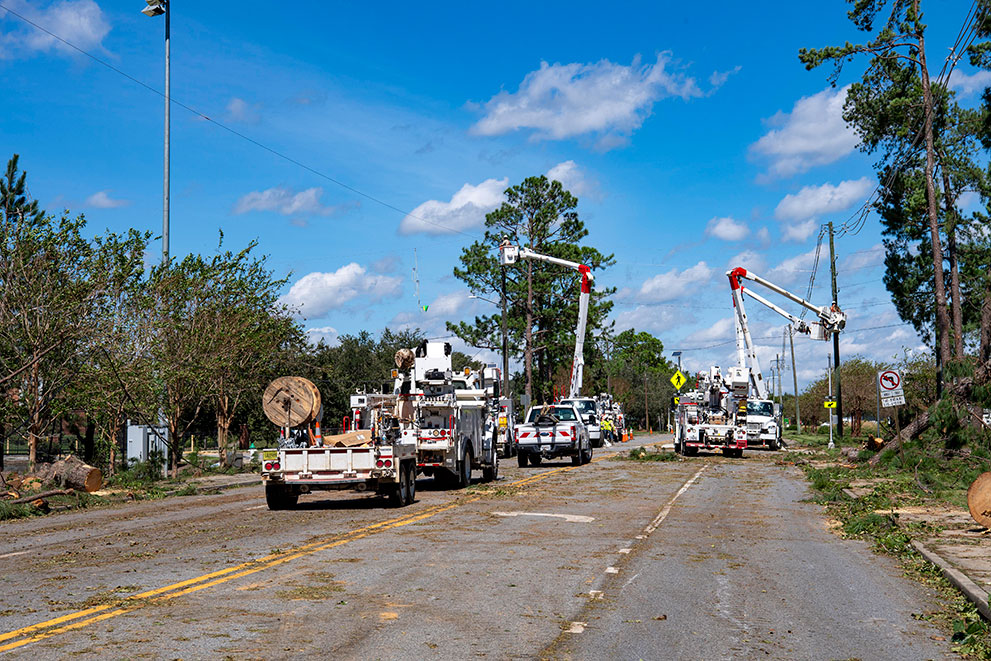
That question is also one we ask ourselves every time there’s an outage. And the answer depends on how the electric system is built and how restoration efforts are determined. Restoration begins first with critical infrastructure and community services, including facilities such as hospitals, emergency response agencies, public safety services, and water and wastewater systems. Crews then focus on repairing transmission lines, substations, and major distribution facilities that can restore power to the greatest number of customers in the shortest amount of time. Once those repairs to critical infrastructure are complete, restoration efforts move to smaller distribution lines, neighborhoods, transformers, and individual service connections.
This structured approach allows power to be restored as safely and efficiently as possible while maximizing the number of customers returned to service with each repair. While it can sometimes appear that nearby areas are receiving power first, restoration often reflects the sequence of repairs needed to restore the electric system from the largest areas serving thousands of customers down to smaller, individual locations.
The People Behind Every Restoration Effort
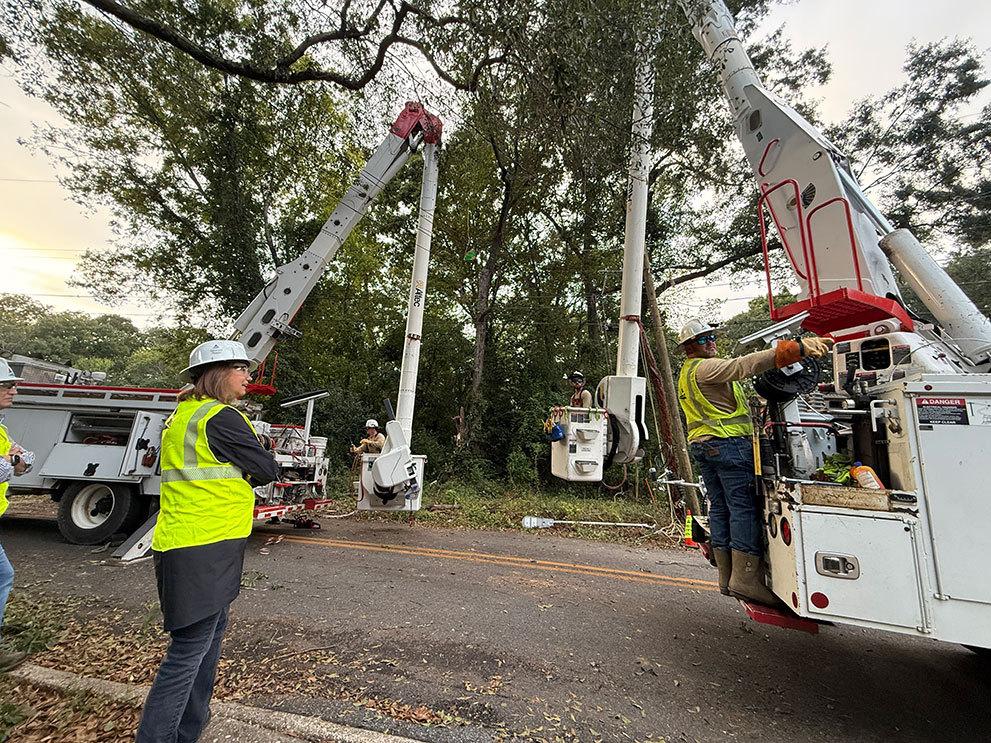
While technology and equipment play important roles during restoration, people remain at the center of every response—we're all in the restoration effort together and we're helping everyone. Line workers, engineers, operators, logistics specialists, customer service representatives, damage assessors, and many others work together throughout an outage event.
For lineworkers especially, storm response often means leaving home with little notice and spending long hours away from their families. During major weather events, crews may work around the clock for days, traveling wherever they are needed to support restoration efforts. During Hurricane Helene in 2024, restoration efforts were so significant that one of our crew leaders in the Waynesboro area walked to his operating headquarters the morning after the storm, using a chainsaw and two tractors to cut dozens of trees and powerlines that blocked his path. Other crews came from unimpacted areas across the state, leaving their families to serve other communities that needed help in the wake of the most destructive hurricane in Georgia Power history.
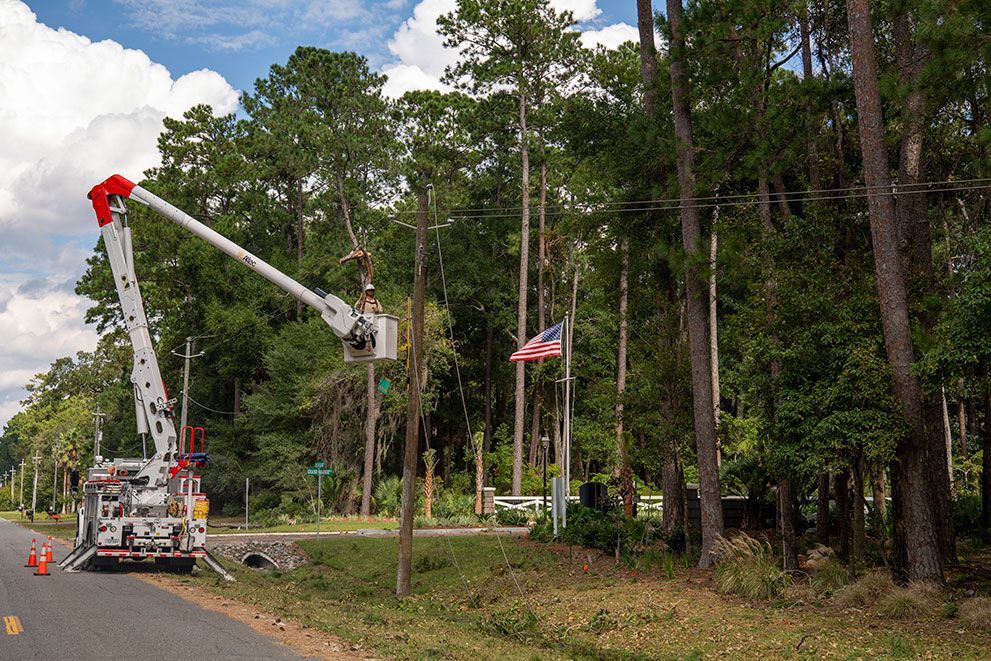
Their work is physically demanding and often takes place in difficult conditions. They climb poles, replace damaged equipment, repair power lines, and help rebuild sections of the electric system, all while maintaining a constant focus on safety.
For many of these employees, the mission is personal. The communities they serve are often the same communities where they live, raise families, and call home.
While customers may primarily see bucket trucks and crews working in their neighborhoods, restoration is truly a team effort involving employees across the company who share a commitment to serving Georgians.
More Than Just Restoring Power
Restoration does not end when the last customer’s service is restored.
After major weather events, storm restoration teams review system performance, assess damage trends, replenish materials, and evaluate opportunities to strengthen the electric system for the future.
These efforts help improve reliability and resiliency, support future response planning, and ensure Georgia Power remains prepared for the next storm, regardless of the season.
Electricity powers our daily lives, from keeping homes comfortable and businesses running to supporting schools, healthcare facilities, and critical community services.
That's why every restoration effort is about more than repairing poles and power lines—it’s about helping families return to normal routines, businesses reopen their doors, and communities recover and move forward.
Whether the outage is caused by a summer thunderstorm, a hurricane, winter weather, or an unexpected equipment issue on a sunny day, Georgia Power employees stand ready to respond.
Because when the power goes out, restoring service is more than a job. It is a commitment to the customers and communities we are proud to serve.
Eric McIntyre is the Storm Center Director at Georgia Power.


